

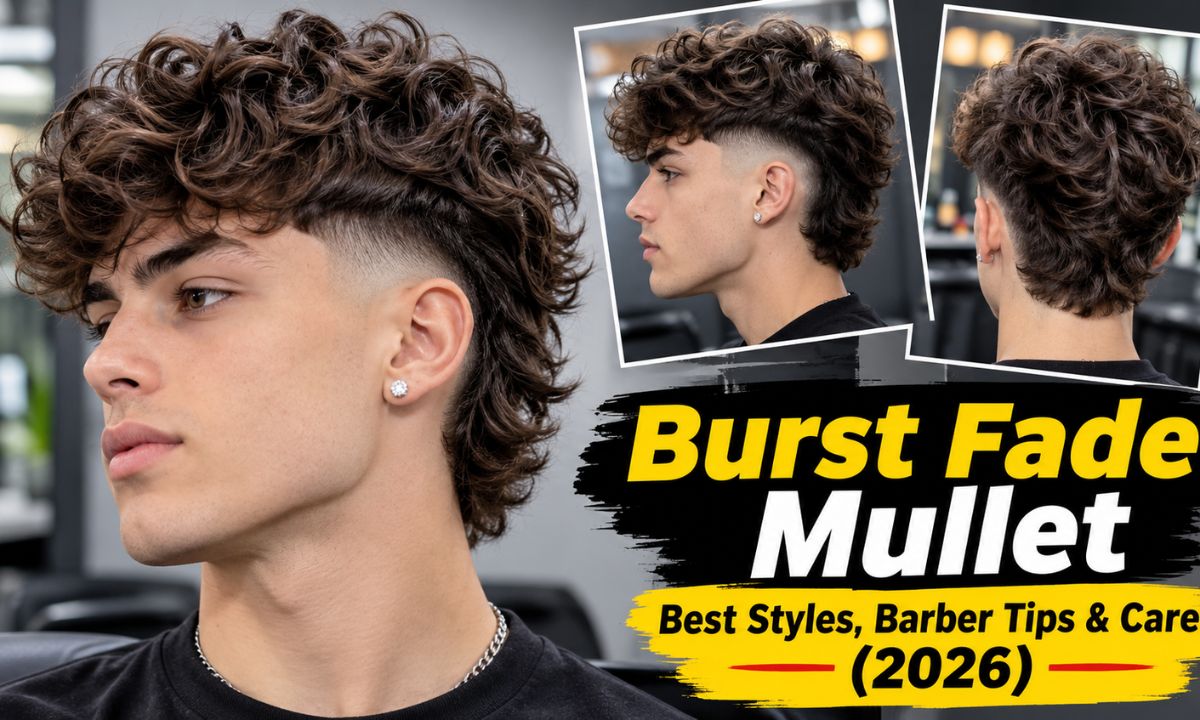
The burst fade mullet is one of the hottest cuts in US barbershops right now. It mixes a curved fade around the ear with extra length at the back. The look is bold, yet it stays clean and easy to wear.
This guide gives you 15 core looks. Each one can be worn short or long at the back, so you get 30 style ideas in total. You will also learn how to talk to your barber, how hair type changes the result, and how to keep the cut sharp between visits.
Whether you are 12 or 52, there is a version that fits you. Let’s start with the gallery.
Burst fade mullet gallery: back lengths and textures
A burst fade does not run straight across the head. It curves around the ear in a half circle, like a small burst of light. The hair behind that curve stays longer. That is why it works so well with a mullet.
Think of every style below as a starting point. Pick the top, pick the back length, and add your natural texture. Small changes can make the same cut look very different.
Here is a quick view of the styles before we go through each one.
| Style | Vibe | Back length | Upkeep |
| Burst mullet | Classic and bold | Medium | Medium |
| Burst taper mullet | Soft and neat | Short to medium | Low |
| Burst taper fade mullet | Balanced | Medium | Medium |
| Side burst fade | Sharp and tidy | Short | Medium |
| Burst fade mullet back | Dramatic | Medium to long | Medium |
| Coily variation | Textured and full | Medium | Medium |
| Curly version | Bouncy and full | Medium | Medium |
| Men’s version | All-purpose | Any | Medium |
| Short version | Safe and simple | Short | Low |
| French crop version | Trendy and clean | Short | Low |
| Mid burst fade | Best balance | Medium | Medium |
| Kids version | Soft and playful | Short | Low |
| Straight hair version | Sleek | Short to medium | Medium |
| Baby version | Gentle | Very short | Very low |
Burst mullet
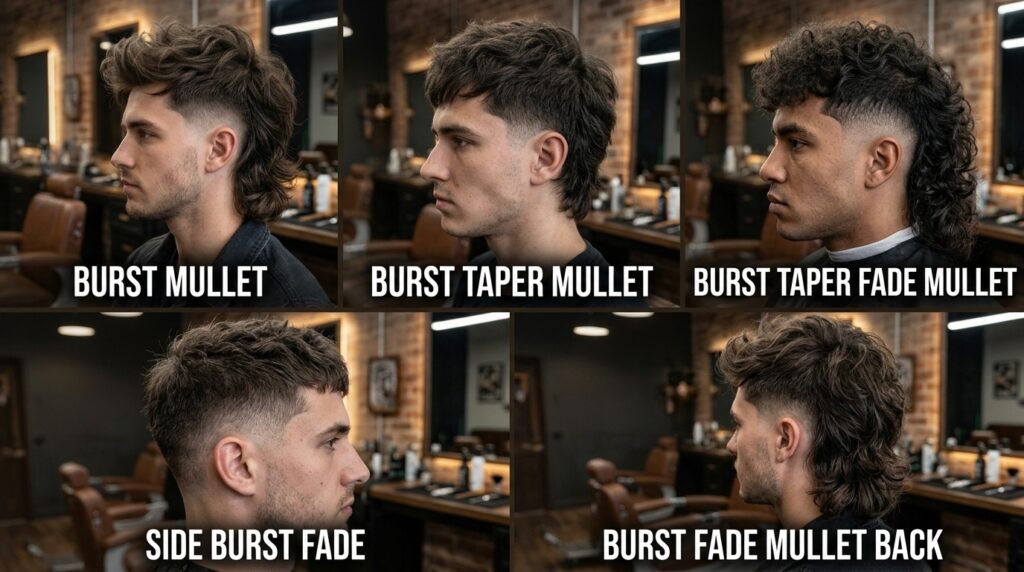
This is the classic version. The fade bursts around the ear, and the back grows into a clear tail. The top stays short to medium.
It suits guys who want a clean look with a little edge. You can go short at the back for work or longer for weekends. It is the easiest place to start if you like the trend but want a proven shape.
Burst taper mullet
Here the fade is softer. The hair gets shorter in small steps instead of dropping to bare skin. This keeps the look neat and calm.
It still shows the mullet shape, but it feels more grown up. It is a great pick for first-timers and anyone with a dress code. It also grows out well, so you can stretch your visits.
Burst taper fade mullet
This style mixes both ideas. The taper sits at the neckline, while the burst curves around the ear. You get contrast without harsh lines.
Barbers like it because it blends well and looks planned from every angle. It works on most hair types. Ask for a low or mid fade depending on how bold you feel.
Side burst fade
The focus here is on the sides. The curve is wide and clean, and the tail stays modest. It is perfect if you want to show off crisp ear work.
Because the back is kept small, it looks tidy in an office or classroom. It also gives you room to grow the tail later. Many guys use this cut as a stepping stone to a longer mullet.
Burst fade mullet back
This look is all about the view from behind. The tail can be blunt, tapered, or pointed. A low neckline looks natural. A higher neckline makes the tail look thicker and more dramatic.
Ask your barber to check the back with a hand mirror before you leave. The shape you see from behind is what most people notice. A clean, even tail makes the whole cut look better.
Burst Fade Mullet: Side, Back and Coily Variation
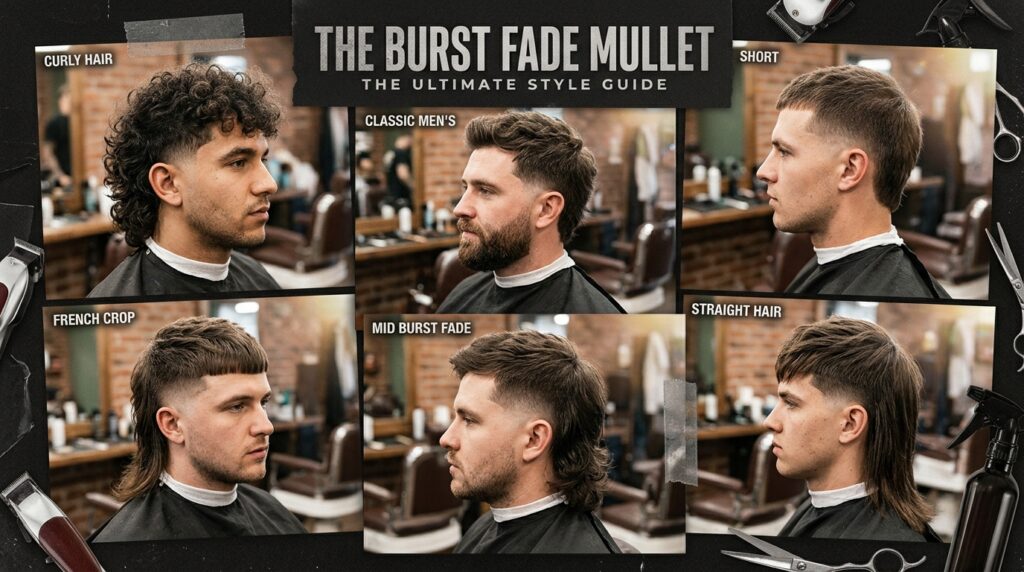
This version is built for tight coils. The sides are faded in a smooth curve, and the back keeps its natural spring. Coily hair holds shape well, so the burst looks crisp.
The contrast between short sides and full texture is the star here. Keep the tail moisturized so it stays soft and defined. A light oil on the ends adds shine without weight.
Quick tips for this look:
- Shape the top and tail with a pick or soft brush
- Keep the neckline clean for a sharp frame
- Moisturize daily to prevent dryness and breakage
Burst fade mullet curly hair
Curls add volume and movement at the back. The fade keeps the sides slim, so the curls stand out more. The result looks full but not messy.
Cut the tail slightly shorter when dry, because curls spring up. A barber who knows curls will check the length as the hair dries. This look is a go-to for loose to medium curls.
Burst fade mullet Men
This is the all-purpose cut for grown men. It works with a full beard, a clean shave, or light stubble. A beard can even help balance a longer tail.
Choose a medium tail for work and a longer one for casual days. Add texture on top for a modern feel. If you are thinning at the crown, a shorter top and a fuller tail can help the cut look balanced.
Read More: Mid Taper Fade for Wavy Hair
Burst fade mullet short
Want the trend without the length? Keep the tail just past the collar line. The burst still gives the cut shape and style.
This version is easy to wash, dry, and style. It is also safe for strict dress codes. If you like it, you can let the back grow a little at a time.
Burst Fade Mullet French Crop
The French crop adds a short, textured fringe across the forehead. Pair it with a burst fade and a small tail, and you get a sharp look with very little effort.
It also helps hide a high forehead. Use a bit of matte clay to push the fringe forward. This cut works best on straight to wavy hair.
Mid burst fade mullet
A mid fade starts around the temple. The burst curve sits in the middle of the sides. It is the best balance between bold and clean.
If you are unsure which fade height to pick, start here. It is not too high and not too low. It flatters most face shapes and works with nearly every back length.
Burst fade mullet Kids
Kids can wear this cut, but keep it simple. Ask for a low burst, soft blending, and a short tail. Skip razor-close fades on young skin, since it can be sensitive.
Make sure the style is comfortable for school and sports. A good rule is to let your child pick the photo. When kids like their hair, they take better care of it.
Burst fade mullet straight hair
Straight hair shows every line, so the fade must be smooth. The tail falls flat and sleek, which can look heavy if it is too thick.
Ask your barber to thin the ends a little. A light cream adds shine and keeps flyaways down. Texture on top stops the cut from looking too flat.
Burst fade Mullet baby
For little ones with growing hair, think soft, not sharp. A gentle trim with a slightly longer nape is enough. Baby hair is fine and delicate, so keep the shape very light.
Use clippers on a safe guard and keep sessions short. Many parents prefer scissors for this age. Always put safety and comfort first, and never force a style on a fussy baby.
Compare your preferences first
Before you book, decide what you want. A quick check saves you from a cut you will regret. Ask yourself three things: how bold do I want to look, how much work will I do, and what does my job allow?
Here is a simple table to help you choose.
| Your priority | Best pick | Why it works |
| Low effort | Burst taper mullet | Soft lines and easy grow-out |
| Office friendly | Short burst fade mullet | Neat and subtle |
| Standout look | Burst fade mullet back | Strong tail and clear shape |
| Curly or coily hair | Curly burst mullet | Uses natural volume |
| Trendy but tidy | French crop version | Short top and clean sides |
Face shape matters too. Round faces look good with height on top. Long faces do well with a shorter tail and fuller sides. Square faces can handle a sharp fade and a blunt tail.
Think about your routine as well. If you hate styling, pick a cut that works air-dried. If you enjoy products and tools, you can go for a more detailed look.
The Anatomy of a Burst Fade Mullet
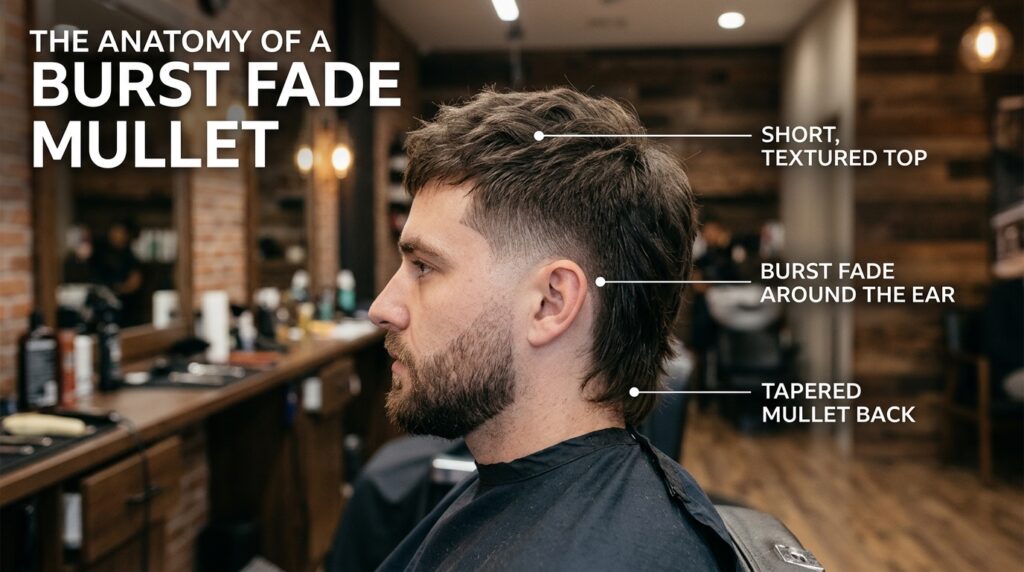
Knowing the parts helps you talk to your barber. A burst fade mullet has four main zones. Each one can be changed on its own.
- Top: Usually short to medium. It can be textured, swept, or cropped.
- Burst curve: The half circle around the ear. It is the signature part.
- Sides: Faded down from the curve. They can be low, mid, or high.
- Tail: The longer hair at the back. This is the mullet part.
The burst starts above or behind the ear and wraps around it. Inside the curve, the hair is short. Outside the curve, the hair stays long. That is what gives the cut its planned, rounded look.
The tail can be shaped in a few ways. A rounded tail looks soft. A V-shape looks sharp. A straight cut looks bold and modern. The neckline can be clean or left natural.
Here is how each zone changes the mood of the cut.
| Zone | Small change | Big change |
| Top | Slight texture | Longer fringe or crop |
| Burst curve | Narrow curve | Wide, high curve |
| Sides | Low fade | High fade |
| Tail | Collar length | Past the shoulders |
Burst Fade Mullet vs Taper Mullet
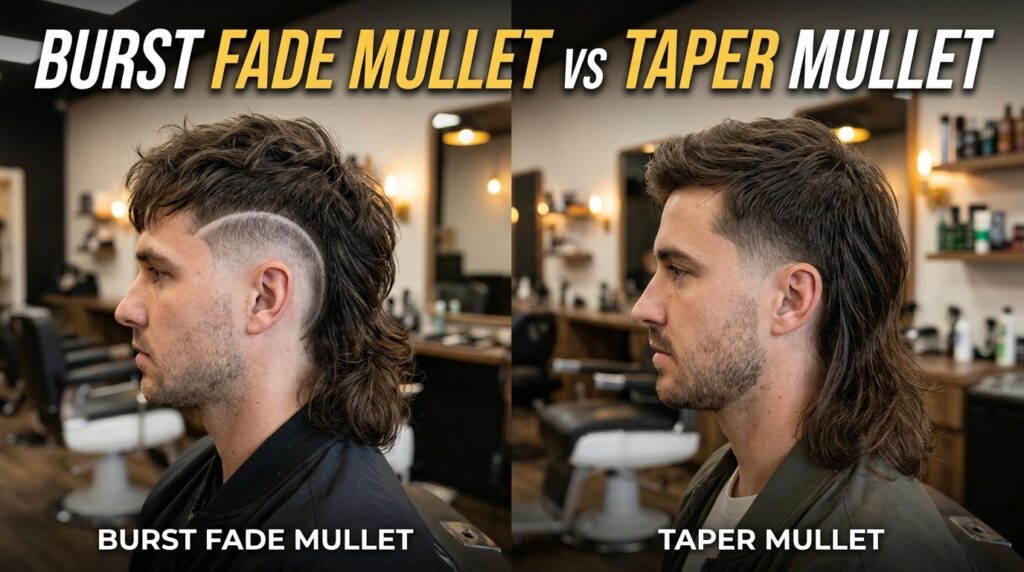
These two cuts are cousins, but they are not the same. People mix them up all the time. The main difference is the shape of the fade.
A taper mullet fades in a straight, even line. It follows the hairline around the ear and neck. A burst fade mullet curves out around the ear and leaves more hair behind it. That curve gives it a stronger look.
| Feature | Burst fade mullet | Taper mullet |
| Fade shape | Curved around the ear | Straight along the hairline |
| Contrast | High | Low to medium |
| Look | Bold and modern | Clean and classic |
| Grow-out | Needs more shaping | Grows out easily |
| Best for | Style seekers | Easy daily wear |
Choose burst if you want attention. Choose taper if you want polish and less upkeep. You can also blend them, like the burst taper fade mullet shown earlier.
If you cannot decide, ask your barber to show you both in a photo. Seeing the difference makes the choice simple.
Choose How Dramatic You Want the Back
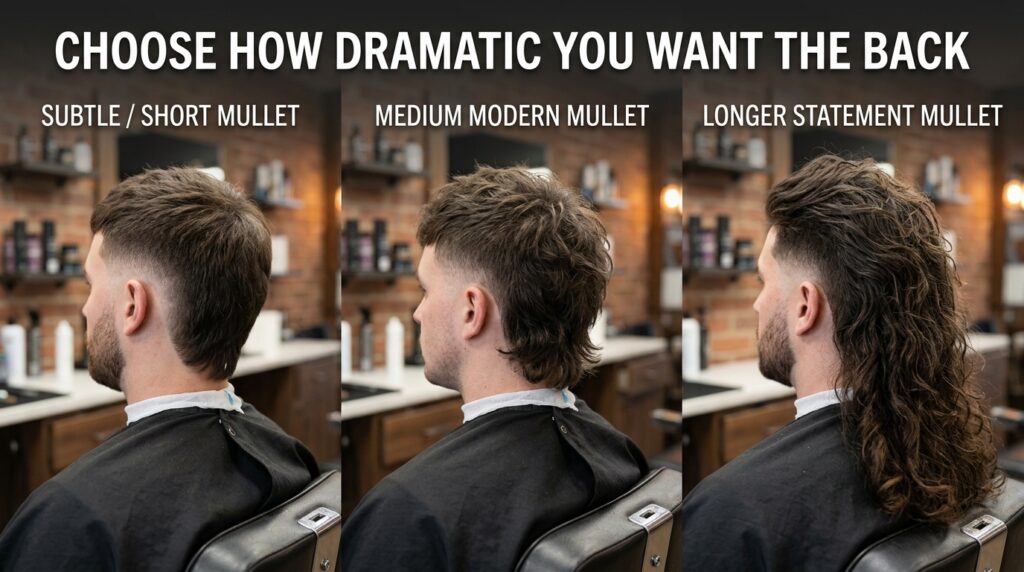
The back length sets the mood. A short tail whispers. A long tail shouts. Pick the one that matches your life.
Hair grows about half an inch each month. So a short tail can turn into a medium one fast. Plan your trims with that in mind.
Subtle / short mullet
The tail sits at the collar or just below the ears. It is easy to hide under a hat and fits most workplaces. This is a smart start if you are testing the trend.
Best for:
- Office jobs
- First-time mullet wearers
- Thin or fine hair
Medium modern mullet
The tail reaches the neck or the top of the shoulders. It has enough length to show shape, and it still looks neat when styled. Most barbers suggest this middle path.
Best for:
- Everyday wear
- Wavy and curly hair
- Guys who like a casual vibe
Longer statement mullet
The tail falls past the shoulders. It needs care, shape, and good products. It stands out in any crowd.
Trim the ends often so the tail does not look stringy. Wash with a gentle shampoo and use conditioner every time. A long tail looks best when it is healthy and shiny.
Best for:
- Creative careers
- Thick hair
- Anyone who loves bold style
What to Say to Your Barber
Photos help a lot. Bring two or three pictures from the front, side, and back. Words matter too, so be clear and specific.
Try saying it like this: “I want a mid burst fade around the ear, a medium tail at the back, and texture on top.” Then add detail about length. Use inches or finger widths, not just “a little.”
Here is a quick script you can use:
- “Please curve the fade around my ear.”
- “Leave the back about three inches long.”
- “Keep the neckline natural,” or “Clean up the neckline.”
- “Add texture to the top, but keep it short.”
- “Blend the sides softly. I do not want a harsh line.”
Ask questions too. Try, “How long will this take to grow out?” and “What products do you suggest for my hair?” Good barbers enjoy clients who care.
Be honest about your habits. If you never style your hair, say so. Your barber can then cut it to fall well on its own.
Avoid vague words like “short” or “long.” They mean different things to different people. A photo and a number are always better.
How Hair Texture Changes the Cut
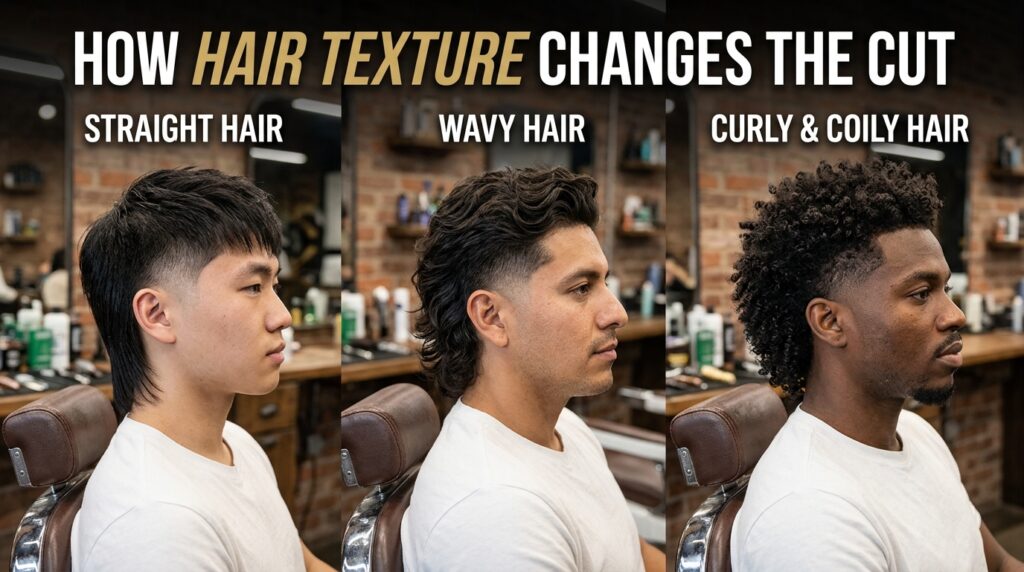
Texture is the biggest factor after length. The same cut can look very different on straight, wavy, or curly hair. A good barber will change the method to suit your type.
Wet hair stretches, and dry hair shrinks. Curls shrink the most. That is why many pros cut curly hair dry or check it dry before they finish.
| Hair type | Fade look | Tail look | Main need |
| Straight | Very sharp | Flat and sleek | Texture and thinning |
| Wavy | Soft and natural | Loose S-shapes | Light hold |
| Curly | Crisp contrast | Full and bouncy | Moisture |
| Coily | Strong contrast | Dense and springy | Moisture and shaping |
Straight hair
Straight hair shows clean lines, so fades look sharp. The tail hangs flat and smooth. It can look heavy if left too thick.
Tips for straight hair:
- Ask for light layering at the back
- Use sea salt spray for volume
- Keep the top textured, not flat
Wavy hair
Wavy hair is the easiest to style. It gives natural movement without much work. The tail forms soft waves that look relaxed.
Tips for wavy hair:
- Use a light cream or mousse
- Air dry or diffuse on low heat
- Trim every five to six weeks
Curly and coily hair
Curls and coils bring volume and character. The burst fade makes the sides crisp and lets the top and back pop. Moisture is the key, since dry curls frizz fast.
Tips for curly and coily hair:
- Cut the tail slightly shorter than you want
- Use leave-in conditioner or curl cream
- Sleep on a satin pillowcase or wear a satin bonnet
- Shape the curls with a soft brush or your fingers
Styling: Front, Crown and Tail
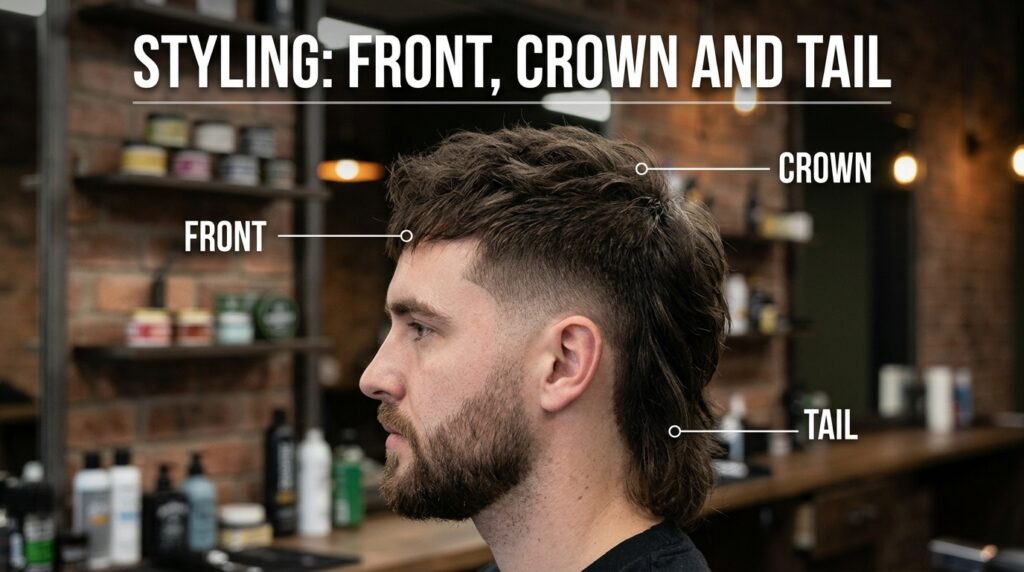
Good styling takes about five minutes. Treat the head in three parts: front, crown, and tail. Each part needs a different touch.
Front: Add texture, not stiffness. Use a matte paste or clay. Rub a pea-sized amount between your palms. Push it through from the back to the front. Then shape the fringe with your fingers.
Crown: The crown is where hair often sticks up. Wet it slightly and blow dry it flat. Then add a little product to hold the shape. A swirl here is normal, so work with it instead of fighting it.
Tail: Keep the tail clean and soft. Use a bit of cream or oil on the ends. For straight hair, comb it down. For curly hair, scrunch and let it dry. Do not overload the tail with gel.
Here is a simple routine:
- Wash and condition your hair.
- Pat dry with a towel. Do not rub.
- Apply a light leave-in or cream.
- Dry with a diffuser or let it air dry.
- Finish with paste on top and oil on the ends.
| Hair part | Best product | Finish |
| Front | Matte clay or paste | Textured |
| Crown | Light spray or cream | Flat and natural |
| Tail | Cream or hair oil | Soft and smooth |
A little product goes a long way. Start small and add more if needed. Too much product makes the cut look greasy and hides the fade.
Maintenance Without Losing the Mullet
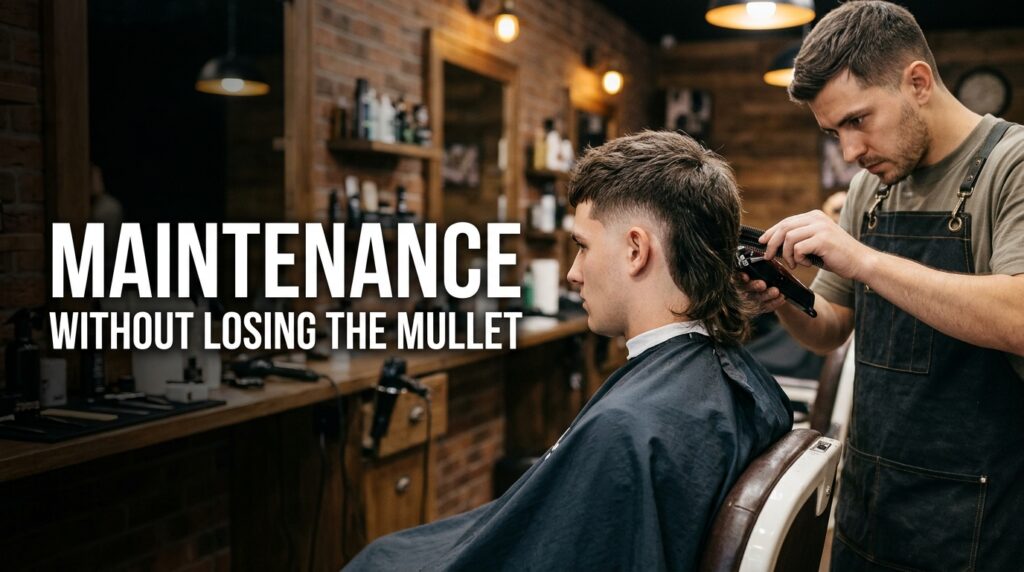
A burst fade mullet looks best when the sides stay fresh. The fade grows out fast. After three weeks, the curve starts to blur. Book a quick fade touch-up every three to four weeks. Leave the tail alone unless the ends look rough.
Trim the tail every eight to ten weeks. Ask for only a half inch off. This keeps the shape without cutting the length you worked hard to grow.
Daily care matters too. Healthy hair holds a style better. Follow these habits:
- Wash two to three times a week, not every day
- Use a gentle shampoo and a good conditioner
- Use heat protectant before a blow dryer
- Deep condition once a week for dry or curly hair
- Brush the tail gently to avoid breakage
Here is a simple care schedule.
| Task | How often |
| Fade and neckline touch-up | Every 3 to 4 weeks |
| Tail trim | Every 8 to 10 weeks |
| Deep conditioning | Once a week |
| Scalp care and wash | 2 to 3 times a week |
If you are growing out the tail, be patient. The awkward stage lasts a few months. Keep the sides faded and the top neat. That way, it still looks like a style choice and not a grow-out phase.
Also protect your scalp. Use sunscreen on faded areas when you are outside. Short sides expose more skin, and it can burn easily.
Frequently Asked Questions
What is a burst fade mullet?
It is a mullet with a fade that curves around the ear. The sides are short, and the back stays longer.
How often should I get my burst fade mullet touched up?
Most people need a fade touch-up every three to four weeks. The tail can wait eight to ten weeks.
Can curly or coily hair get a burst fade mullet?
Yes. Curly and coily hair works very well because the fade makes the natural volume stand out.
How long should the back be on a burst fade mullet?
It can be anywhere from collar length to past the shoulders. Most men choose a medium tail at the neck.
Is a burst fade mullet good for kids?
Yes, if it is kept soft and short. Ask for a gentle blend and avoid very close fades.
Final Thoughts
The burst fade mullet gives you freedom. You can go short and clean or long and bold. The curved fade around the ear keeps everything sharp, while the tail adds personality. With 15 looks and two length options each, there is a version for almost every hair type, age, and job.
Pick your style, bring clear photos, and talk through the details with your barber. Then keep up with regular fade touch-ups and simple daily care. Do that, and your cut will look great in 2026 and beyond.

William Foster is a hair and beauty content writer at Easy Faxhion, sharing practical information about hairstyles, hair care, grooming, and styling. He focuses on clear, reader friendly articles supported by careful research and thoughtful content development, helping readers discover useful ideas and make informed everyday hair care choices.