
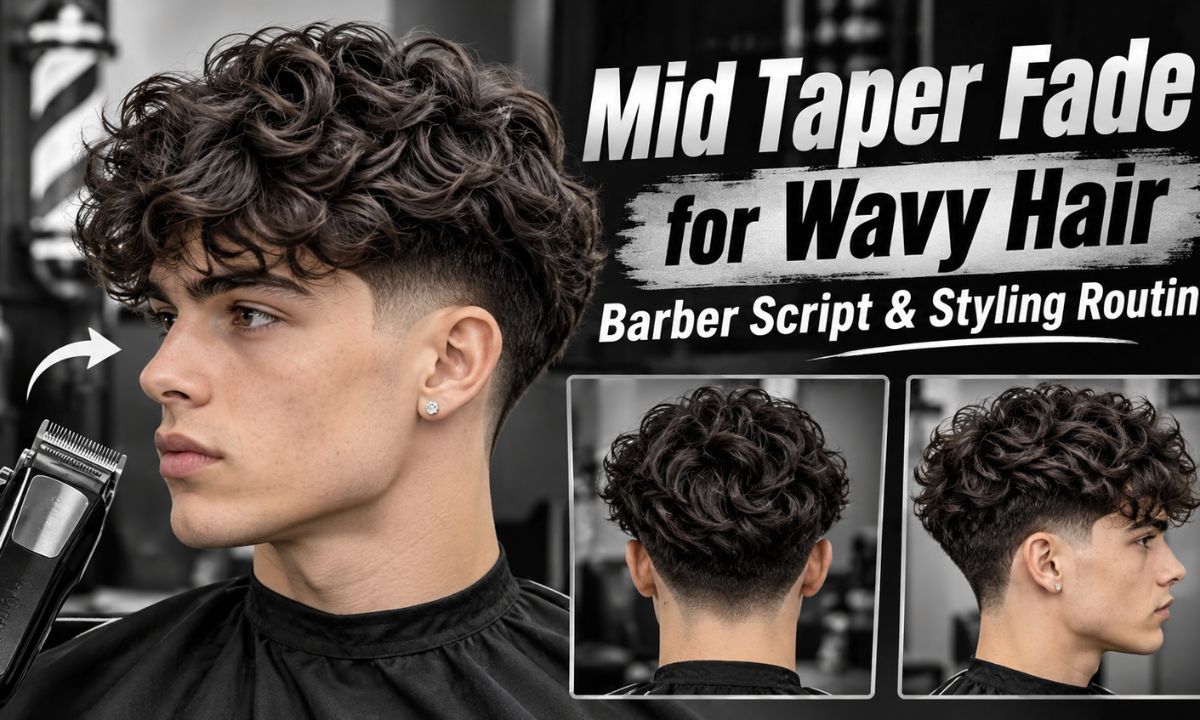
Wavy hair has a mind of its own. It bends, bounces, and sometimes puffs up when you least expect it. A good haircut can calm that chaos and show off your natural texture. For many guys in the US, the mid taper fade is the cut that does exactly that.
This guide explains how the cut works, what to ask your barber, and how to style it at home. You will also find a ready-to-use barber script, common mistakes to avoid, and a simple schedule for touch-ups. Read it once, save it on your phone, and walk into your next appointment with confidence.
Wavy Hair With a Mid Taper: Front, Side and Rear
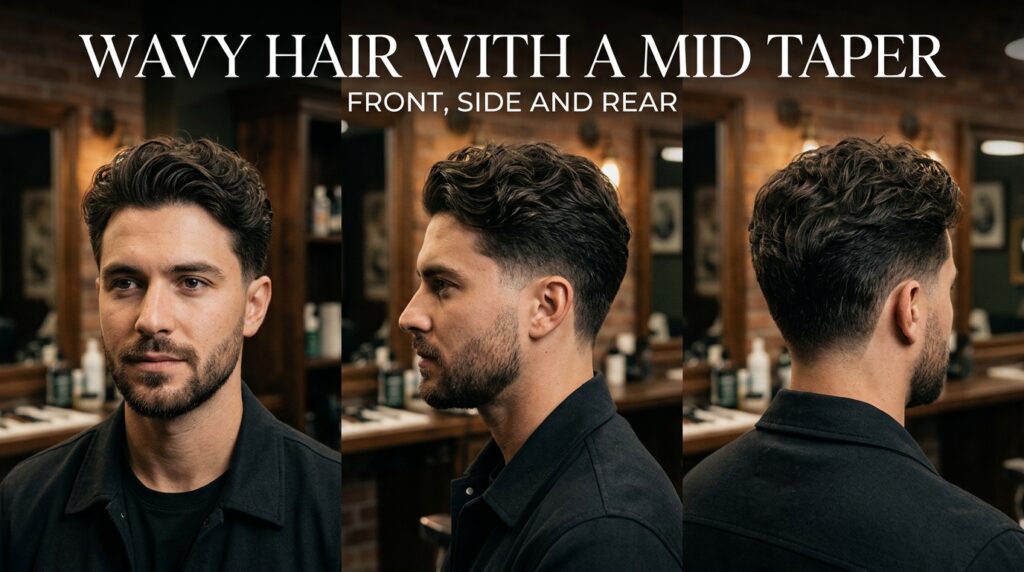
A mid taper starts the shortening process around the middle of the head. That is roughly at the temple and just above the ear. From there, the hair gets gradually shorter as it moves down toward the neckline. The top stays longer, so your waves have room to move.
Here is how each area should look when the cut is done right.
Front: The hairline stays soft and natural. The top can sit anywhere from two to four inches, depending on your wave pattern. A little length in the front lets the waves fall forward or sweep back.
Sides: The taper begins at mid-height. The hair blends smoothly from a short length near the ear to the longer length above. There should be no hard line. The goal is a clean gradient.
Rear: The back follows the same gradual shortening toward the nape. The neckline can be tapered for a natural look or squared for a sharper finish. Most wavy-haired guys prefer a tapered neckline because it grows out better.
| Area | Typical Length | What to Aim For |
| Front | 2 to 4 inches | Soft hairline, free-moving waves |
| Top | 3 to 5 inches | Enough weight to show the wave pattern |
| Sides | Short to medium, graded | Smooth blend with no harsh line |
| Rear | Short at nape, longer above | Clean, natural neckline |
Why Wavy Hair Pairs Well with a Mid Taper

Wavy hair needs balance. Too much length on the sides makes the head look wide and heavy. Too little length on top makes the waves disappear. The mid taper solves both problems at once.
The shorter sides keep the shape tight and neat. The longer top shows off your natural texture. Together, they create contrast. That contrast makes the waves look intentional, not messy.
There are other reasons this cut works so well:
- It is easy to grow out without looking awkward.
- It works for school, office, and weekend looks.
- It suits most face shapes, from oval to square.
- It needs only a few minutes of styling each morning.
- It keeps hair out of your ears and off your neck in warm weather.
Wavy hair also hides small blending flaws better than straight hair does. The natural movement softens the transition. That is good news if your barber is still learning your head shape.
Compare your preferences first
Before you sit in the chair, think about how you actually live. A cut that looks great on Instagram may not fit your routine. Ask yourself a few simple questions.
How much time do you spend on your hair each morning? Do you want to wash it daily or every other day? Does your job allow longer hair? Do you like a clean, sharp finish or a relaxed, lived-in look?
Your answers will help you and your barber choose the right version of the cut.
| Your Preference | Best Choice |
| Very low maintenance | Low mid taper with a short top |
| Professional workplace | Mid taper with a side-swept top |
| Strong, bold look | High taper with extra length on top |
| Natural and relaxed | Mid taper with a loose, flowing top |
| Quick morning routine | Mid taper with a two-to-three inch top |
Bring one or two photos to the shop. Pick images of guys with a similar wave pattern to yours. A photo of straight hair will not help much, because waves behave differently.
Mid Taper vs Mid Fade on Wavy Hair

People often mix up these two cuts. They look similar from far away, but they are not the same.
A taper shortens the hair gradually. It usually leaves some visible length even at the shortest point. A fade goes down to the skin, or very close to it. It creates a dramatic shift from skin to hair.
On wavy hair, a taper tends to look softer and more natural. A fade looks sharper and more modern. Both can look great. It depends on the style you want.
| Feature | Mid Taper | Mid Fade |
| Shortest point | Short hair remains | Skin or near skin |
| Look | Soft and classic | Sharp and bold |
| Grow-out | Easy and gradual | Needs quicker touch-ups |
| Best for | Work and daily wear | Standout, trend-driven styles |
| Maintenance | Every 3 to 4 weeks | Every 2 to 3 weeks |
If you are not sure, start with the taper. You can always go shorter next time. You cannot add hair back once it is cut.
Mid taper fade for wavy hair male

For men, this cut is a strong everyday choice. It looks neat without trying too hard. The sides stay tidy, and the top keeps its natural shape.
Most men with wavy hair do well with a top length of three to four inches. That length lets the waves form fully. Anything shorter can look flat. Anything much longer can start to curl in odd directions.
Ask for a taper that blends into the beard if you have facial hair. This connection makes the whole look feel finished. Keep the beard trimmed to match the sharpness of the cut.
Mid taper fade for wavy hair straight
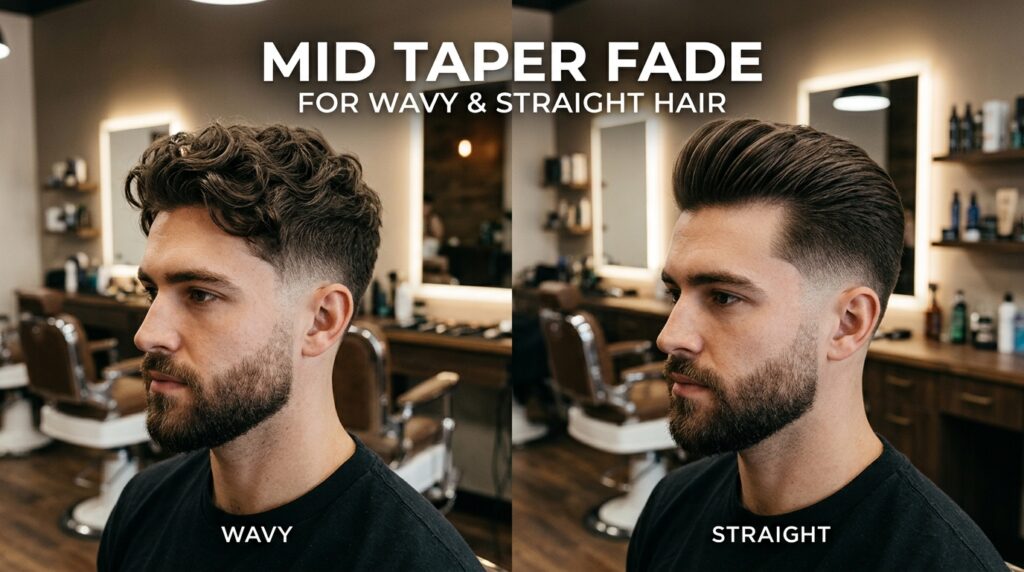
Some guys have hair that is mostly straight with a gentle bend, and some have a mix of both. This is common. The hair may look straight when short and wavy when it grows longer.
If this sounds like you, keep the top slightly longer than you think you need. The extra weight pulls the hair down and exposes the soft wave. Cutting it too short can make the hair stick up and look uneven.
Using a light sea salt spray can help. It adds grip and encourages the natural bend.
Read More: Best Fade Haircuts for Black Men
Mid taper fade for wavy hair straight hair
This version is for guys whose hair is mostly straight, with only a hint of wave near the ends. The mid taper still works well here. It gives structure to hair that might otherwise fall flat.
A few tips for this hair type:
- Ask for light texturizing on top, so the hair does not sit too heavy.
- Avoid thick, heavy pomades. They pull the waves out.
- Use a lightweight cream or mousse for subtle movement.
- Blow-dry with a diffuser or your fingers to bring out the bend.
The result is a clean cut with a relaxed, natural top.
High taper fade

A high taper starts the shortening much higher on the head, close to the top of the temple. The effect is bold and clean. It makes the top look fuller because the contrast is stronger.
This option suits guys who want a sharp, modern look. It works well with thick waves because the short sides balance the volume on top. It does need more upkeep. The short area grows out quickly and becomes obvious.
Choose a high taper if you want people to notice the shape of your cut. Choose something lower if you want a quieter look.
Low taper fade
A low taper begins near the ear and the back of the neck. It leaves most of the side hair intact. The change is subtle, and the cut looks soft and natural.
This is a great choice for conservative workplaces. It also grows out very gracefully. Many barbers suggest it for first-time taper clients who feel nervous about going short.
For wavy hair, a low taper keeps more weight around the sides. That can help if you have fine hair and want extra fullness.
Low mid taper fade for wavy hair
Sometimes you want something between low and mid. A low mid taper starts just above the ear and sits slightly under the true mid point. It gives you a gentle gradient with a bit more shape than a pure low taper.
This blend works well on wavy hair because it controls bulk without cutting away too much. The silhouette stays balanced. You get a neat outline and still enough length on the sides to look relaxed.
Tell your barber exactly where you want the start line. Pointing to a spot on your head helps avoid confusion.
Low taper fade wavy hair
On wavy hair, a low taper fade keeps things subtle and wearable. The waves on top are the hero. The sides simply frame them.
Because the taper is low, there is less short hair to maintain. You can stretch your visits to every four or five weeks. That is helpful if your schedule is busy.
Pair it with a medium-length top and a light texturizing product. You will get a natural, effortless finish.
Mid Taper wavy hair
This is the classic combination. The mid taper trims the sides to a tidy shape, and the wavy top gives personality. It is balanced, versatile, and easy to wear.
The main thing is to let the waves breathe. Avoid cutting the top too short, and avoid piling on heavy products. Let the cut and the natural texture do the work.
Most guys find this the easiest style to maintain over time. It looks good fresh, and it still looks good after a few weeks.
Mid taper wavy hair
You may see this phrase used the same way in search results. It means the exact same thing: a mid-height taper paired with a wavy top. The key is clear communication with your barber.
Describe three things: where the taper starts, how short the sides should get, and how much length you want on top. That simple formula avoids most problems.
If you keep these three points clear, any skilled barber can deliver the cut you picture.
Taper fade wavy hair
Taper fade is a loose term. Many barbers use it to describe a taper that is slightly shorter at the bottom, almost like a light fade. It gives you a clean finish at the neckline and sideburns.
On wavy hair, this blend feels polished but not harsh. The bottom edge stays soft. The top retains its natural movement.
If you like the idea of a taper with a slightly sharper bottom, use this phrase. Then explain how short you want the shortest part.
Wavy hair taper
A wavy hair taper focuses on how the shortening works with the wave pattern. Waves tend to bunch up when cut too short, so the taper should be gradual. Quick jumps in length can make the hair look choppy.
A good barber cuts wavy hair slightly longer when it is dry. They may also check the cut after it has dried naturally. This helps them see how the waves behave.
If your barber cuts your hair soaking wet, ask them to leave extra length. Wet waves stretch, and they spring back shorter when dry.
Wavy mid taper
A wavy mid taper puts the spotlight on the top. The sides are neat and short. The top has volume, shape, and a soft wave.
This version looks best when the top has some layering. Light layers remove bulk and help the waves stack nicely. Without layers, thick wavy hair can look boxy.
Ask your barber for subtle texture, not heavy thinning. Too much thinning can cause frizz.
Mid taper with wavy hair
This phrase describes the same idea in a more casual way. The goal is a balanced cut that respects your hair type.
If you are new to the style, start with a medium top length and a mid-height taper. Wear it for a month and see how it feels. Then adjust the top, sides, or fade height at your next visit.
Small changes add up. They help you find the exact cut that fits your face and lifestyle.
Where Wavy Hair Usually Goes Wrong

Even a good cut can fail if a few details are off. Most problems come from the same three mistakes. Knowing them helps you avoid disappointment.
1. Too much bulk above the taper
Wavy hair is thick at the roots and spreads outward. If the top is too heavy, the head can look wide and top-heavy. The taper starts to look disconnected from the rest.
The fix is simple. Ask your barber to remove weight from the transition area. Light point cutting or razor texturing can help. The top should flow into the taper, not sit on it like a hat.
2. Cutting the wave too short
This is the most common error. Waves shrink as they dry. A cut that looks long when wet can look tiny when dry.
Always leave extra length at first. You can trim more later. If your waves are tight, aim for at least three inches. If they are loose, two and a half inches may be enough.
3. Heavy product on damp waves
Thick gels and waxes weigh down the pattern. They turn soft waves into stiff clumps. They can also leave residue that dulls the hair.
Use light products on damp hair. A cream, mousse, or sea salt spray works best. Add a small amount, then build up if needed.
Barber Script: Use This in the Chair
Not sure what to say? Here is a simple script you can use word for word. Adjust the numbers to fit your style.
“Hi, I would like a mid taper with my wavy hair. Please start the taper at the middle of my temple and blend it smoothly down to the neckline. I want the shortest part to stay around a number 2 guard, not skin. Keep the top about three to four inches long. Please add a light texture on top and cut it dry so we can see the wave. Leave my front hairline natural. Taper the back and make the neckline soft, not blocky.”
Here is a quick cheat sheet to keep on your phone.
| What to Say | Why It Helps |
| “Mid taper, not a fade” | Keeps some length at the shortest point |
| “Start at the temple” | Sets the exact height |
| “Number 2 guard at the bottom” | Controls how short it goes |
| “Three to four inches on top” | Protects the wave pattern |
| “Cut it dry” | Shows how the waves really fall |
| “Soft neckline” | Allows an easier grow-out |
Also ask your barber to show you the back with a mirror before you leave. That small step avoids surprises at home.
Simple Morning Routine for Wavy Hair
You do not need ten products or an hour in the bathroom. A short routine is enough. Here is a simple method that works for most guys.
- Rinse or wet your hair. Use lukewarm water. Hot water can dry out your waves.
- Apply a light product. Use a pea-sized amount of cream or a few sprays of sea salt spray.
- Scrunch gently. Squeeze the hair upward in small sections. This encourages the wave.
- Dry smartly. Air dry if you have time. If not, use a blow dryer with a diffuser on low heat.
- Finish with texture. Once dry, add a small amount of matte paste or clay. Rub it between your palms first.
- Shape with your fingers. Move the waves where you want them. Avoid brushing, as it creates frizz.
A few extra tips:
- Wash your hair two to three times a week, not daily.
- Use a sulfate-free shampoo to protect natural oils.
- Sleep on a silk or satin pillowcase if you can.
- Condition from the mid-lengths to the ends.
Three Top Styles That Work

The mid taper gives you a clean base. The top is where you can express your style. Here are three reliable options for wavy hair.
Textured fringe
The textured fringe sits forward on the forehead with a casual, broken-up look. It suits oval and square faces. It is great for guys who want a youthful, easy style.
To get it, keep the front slightly longer than the back. Apply a light cream and push the hair forward with your fingers. Finish with a bit of matte paste for definition.
Natural flow
The natural flow style lets your waves fall where they want. It looks relaxed and effortless. It is perfect for guys with a good wave pattern who do not like fussing.
Keep the top around three to four inches. Use a leave-in conditioner or light cream. Let the hair dry on its own. Minimal product is the secret here.
Loose quiff
The loose quiff lifts the front and sweeps it back. It looks confident and a bit polished. It works well in office settings and on dates.
Use a blow dryer to lift the roots. Then apply a light styling paste and shape the front upward. Do not use too much hold. The quiff should feel soft, not stiff.
| Style | Best For | Effort Level |
| Textured fringe | Casual, youthful looks | Low |
| Natural flow | Relaxed, everyday wear | Very low |
| Loose quiff | Work and social events | Medium |
How Often Should You Refresh It?
The right schedule depends on the type of taper and how fast your hair grows. Most hair grows about half an inch per month. A taper loses its shape faster than the top does.
Here is a simple guide.
| Cut Type | Suggested Visit |
| Low taper | Every 4 to 5 weeks |
| Mid taper | Every 3 to 4 weeks |
| High taper or fade | Every 2 to 3 weeks |
You do not always need a full cut. A quick clean-up around the neckline and sideburns can extend the life of your style. Many barbers charge less for a simple edge-up.
Watch for these signs that it is time to book:
- The taper line looks fuzzy or soft.
- The sides feel bulky around the ears.
- The neckline looks untidy.
- Your waves feel heavy and shapeless.
If you want to keep the top longer, trim only the sides. Then give the top a full trim every second or third visit.
Frequently Asked Questions
What is a mid taper fade for wavy hair?
It is a haircut where the sides gradually shorten from the middle of the head down to the neck. The longer top keeps your natural waves.
How long should wavy hair be on top for a mid taper?
Three to four inches works best for most guys. That length lets the waves form without looking flat or too heavy.
Is a mid taper better than a mid fade for wavy hair?
A mid taper looks softer and grows out easier. A mid fade looks sharper but needs more frequent touch-ups.
How often should I get a mid taper haircut?
Most men should visit every three to four weeks. A quick edge-up between cuts can help the style last longer.
What product is best for styling wavy hair with a taper?
Use a light cream, mousse, or sea salt spray on damp hair. Finish with a small amount of matte paste for texture.
Final Thoughts
The mid taper is one of the easiest ways to make wavy hair look sharp. The shorter sides keep the shape tidy. The longer top lets your natural waves shine. With a clear plan, you can avoid the usual mistakes and enjoy a cut that looks good every day.
Start by knowing your preferences, then use the barber script to explain what you want. Keep your styling light and simple. Refresh the cut on a steady schedule. With these small habits, your waves will stay healthy, your edges will stay clean, and your style will feel like your own.

William Foster is a hair and beauty content writer at Easy Faxhion, sharing practical information about hairstyles, hair care, grooming, and styling. He focuses on clear, reader friendly articles supported by careful research and thoughtful content development, helping readers discover useful ideas and make informed everyday hair care choices.