
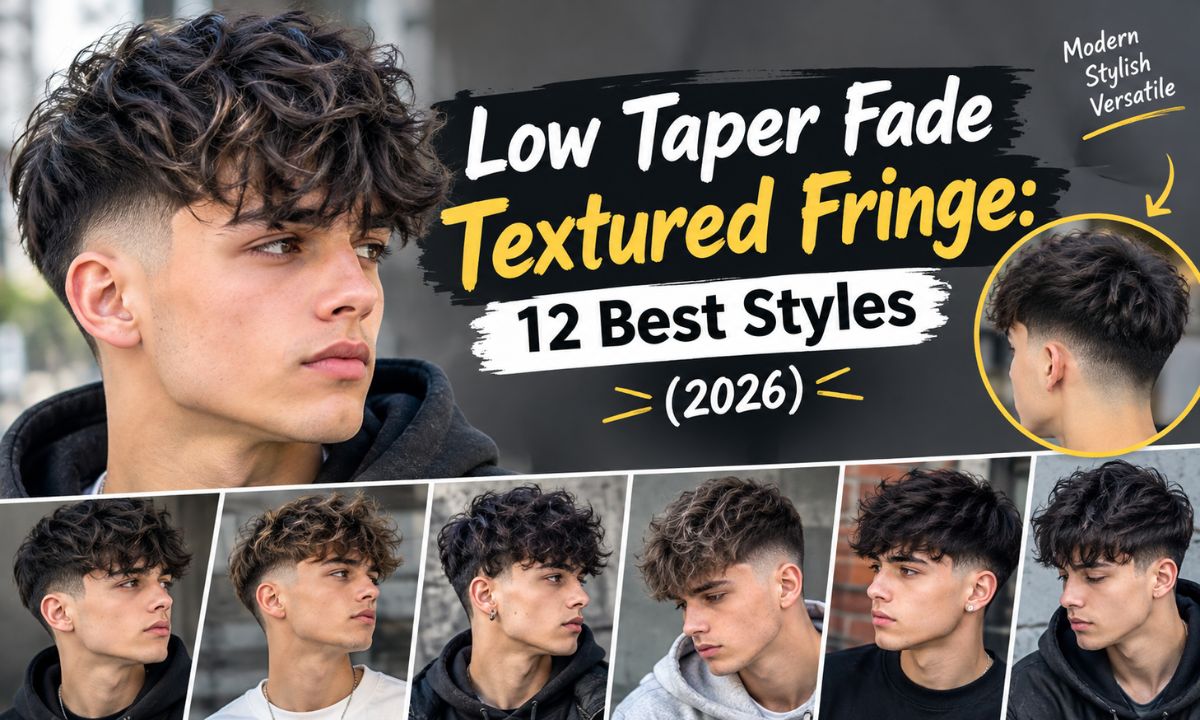
The low taper fade with textured fringe is one of the most requested men’s cuts in the U.S. right now. It looks sharp. It looks relaxed. It also works on almost every hair type. Whether you have straight, wavy, or curly hair, there is a version that fits you.
This guide covers 12 of the best styles, plus styling tips, face shape advice, and care steps. You will also learn how a low taper compares to a mid taper fade. Bring a photo from this list to your barber and you are set.
Why the Low Taper Fade Textured Fringe Is Trending
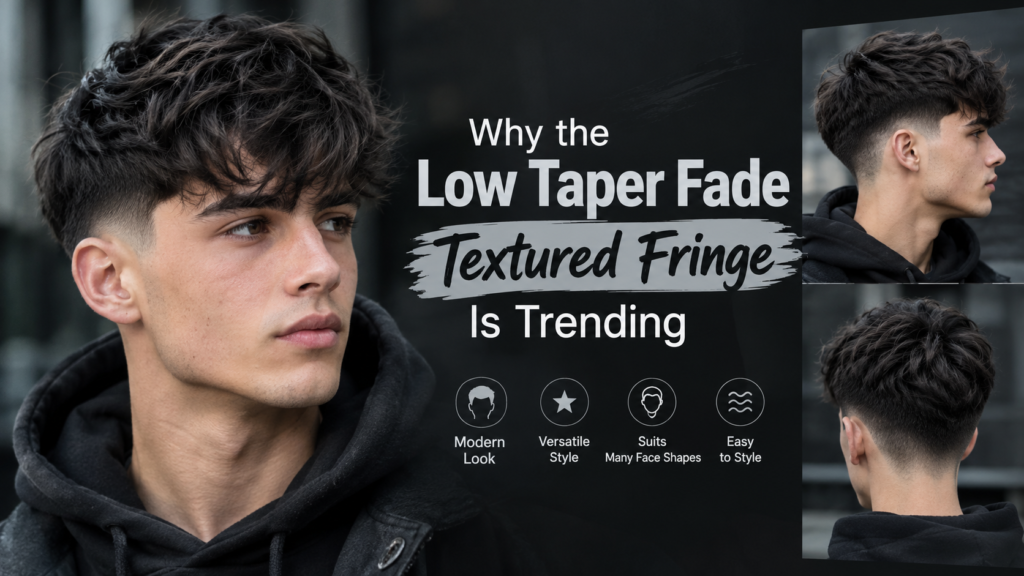
This cut gives you two looks in one. The sides stay clean and neat. The top stays soft, loose, and full of movement. That mix feels modern but never too bold.
It is also easy to wear. You can go to the office, the gym, or dinner with the same haircut. A small change in styling shifts the mood from casual to polished.
Here is why so many guys are asking for it:
- Low maintenance: Most people style it in under five minutes.
- Flexible: It suits straight, wavy, and curly hair.
- Subtle fade: The taper stays near the ears and neckline, so it grows out well.
- Social media friendly: It looks great from every angle, which is why it spreads fast on TikTok and Instagram.
- Works at any length: Short, medium, or long on top all work.
The low taper fade fringe also fits the current move away from harsh skin fades. Men want clean edges without looking too stark. This cut delivers that.
Messy Textured Fringe Low Taper Fade
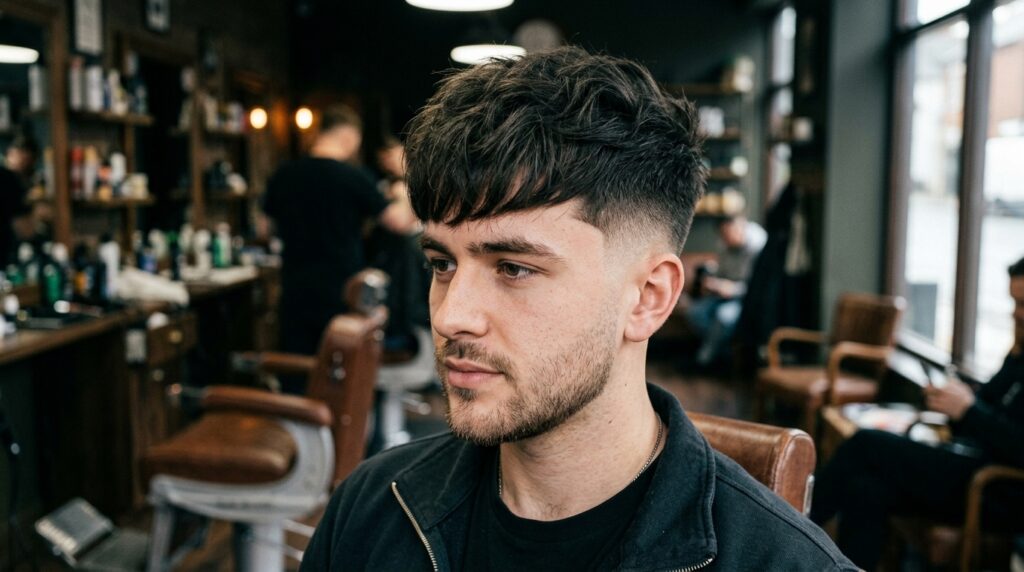
This is the classic “I just woke up like this” look. The fringe is choppy, uneven, and full of life. The sides are tapered low so the mess on top looks planned.
Ask your barber for point cutting on the top. This removes bulk and creates broken edges. Then use a matte clay or paste. Rub it between your palms and push it forward with your fingers.
Best for: Fine to medium hair, oval and square faces.
Curly Textured Fringe with Low Taper
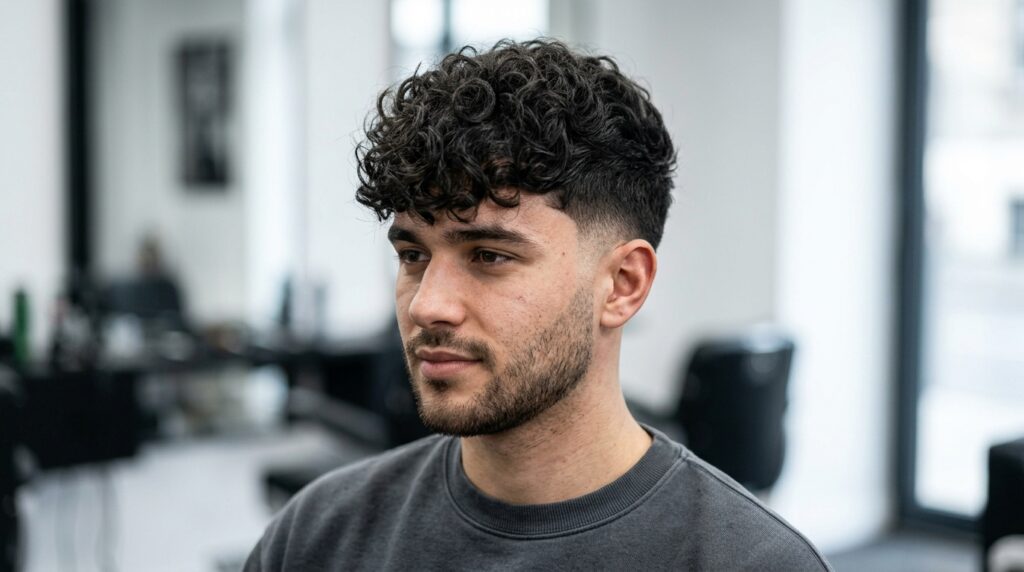
Curls and a low taper are a great pair. The tapered sides keep the shape tidy, while the curls on top stay bouncy and defined. It stops curly hair from looking too wide.
Keep the top about 3 to 4 inches long. Cut it when it is dry so your barber can see how each curl falls. Use a curl cream on damp hair, then let it air dry or use a diffuser.
Best for: Type 3 and type 4 curls, round and oval faces.
Blowout Textured Fringe Low Taper
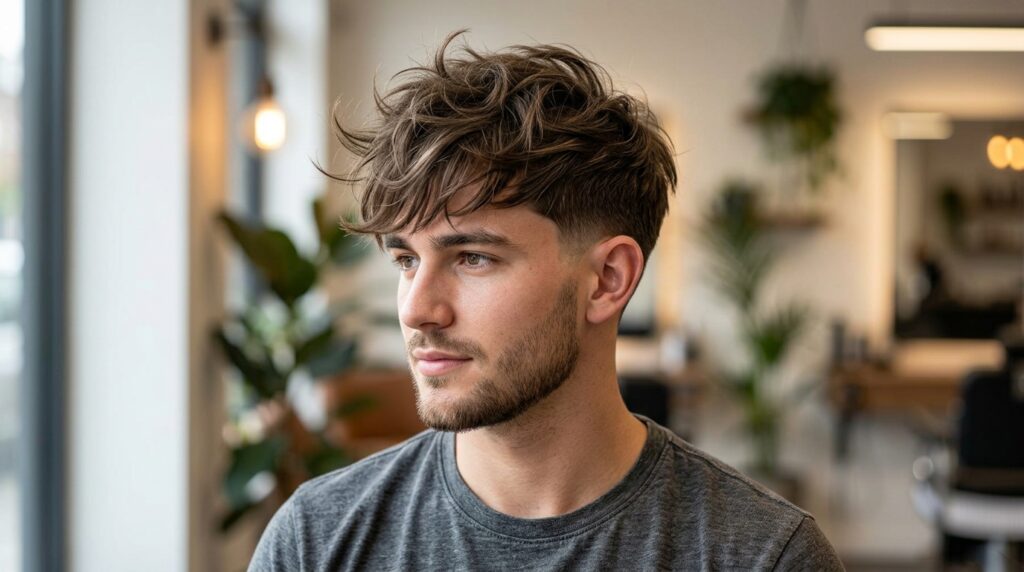
The blowout adds height and volume to the front. It gives a full, brushed-forward look with a lot of body. The low taper keeps the sides slim so the volume stands out.
To get it, towel dry your hair and apply a sea salt spray. Blow dry the top upward and forward with a round brush or your fingers. Finish with a light hold cream or a bit of hairspray.
Best for: Thick or medium hair, long and oval faces.
Read More: 25 Best Low Fade Haircuts for Men in 2026
Wavy Fringe Low Taper Fade

Natural waves already have texture, so this cut leans into them. Your barber trims the top to let the waves bunch up and fall across the forehead. The low taper cleans the sides and neck.
Do not brush your waves when dry. Scrunch in a lightweight mousse or cream and let them dry on their own. This keeps the wave pattern soft instead of frizzy.
Best for: Wavy hair of any thickness, most face shapes.
Straight Hair Textured Fringe Taper

Straight hair can look flat. Texture fixes that. Your barber will cut layers and use a razor or thinning shears to add movement to the fringe.
Use a texture powder at the roots, then a clay to define the ends. This builds grip that straight hair lacks. A low taper on the sides keeps the look crisp.
Best for: Straight, medium to thick hair, square and round faces.
French Crop Textured Fringe with Low Taper

The French crop is short on top with a blunt, horizontal fringe. It is neat and sharp. Add texture and it feels less stiff and more current.
Ask for a short top, about 1.5 to 2.5 inches, with a cropped line across the forehead. Use a matte paste and push the hair forward. It takes almost no time.
Best for: Thick hair, receding hairlines, oval and long faces.
Asian Textured Fringe Low Taper
Asian hair is often straight, thick, and strong. That makes it perfect for a heavy textured fringe. It holds shape well, but it can look heavy without thinning.
Ask your barber to texturize the top with a razor or thinning shears. A low taper keeps the sides slim and balanced. Use a strong matte clay and a bit of blow dry for lift.
Best for: Thick, straight hair, round and oval faces.
Fluffy Fringe Low Taper Fade

This look is soft, airy, and full. The fringe falls forward in loose layers with lots of volume. It is a favorite for younger guys and anyone who likes a friendly, approachable vibe.
Blow dry the top with a brush and keep the product light. Too much clay weighs it down. A volumizing mousse or sea salt spray works best.
Best for: Fine to medium hair, oval and heart-shaped faces.
Mid-Length Textured Fringe with Low Taper

If you want more hair to play with, this is the one. The top sits at about 4 to 6 inches. You can sweep it to the side, push it forward, or pull it back.
The low taper keeps the sides short enough to avoid a shaggy look. Use a light cream for a natural finish. Get a trim every five to six weeks to hold the shape.
Best for: Wavy or straight hair, most face shapes.
Textured Fringe with Beard and Low Taper
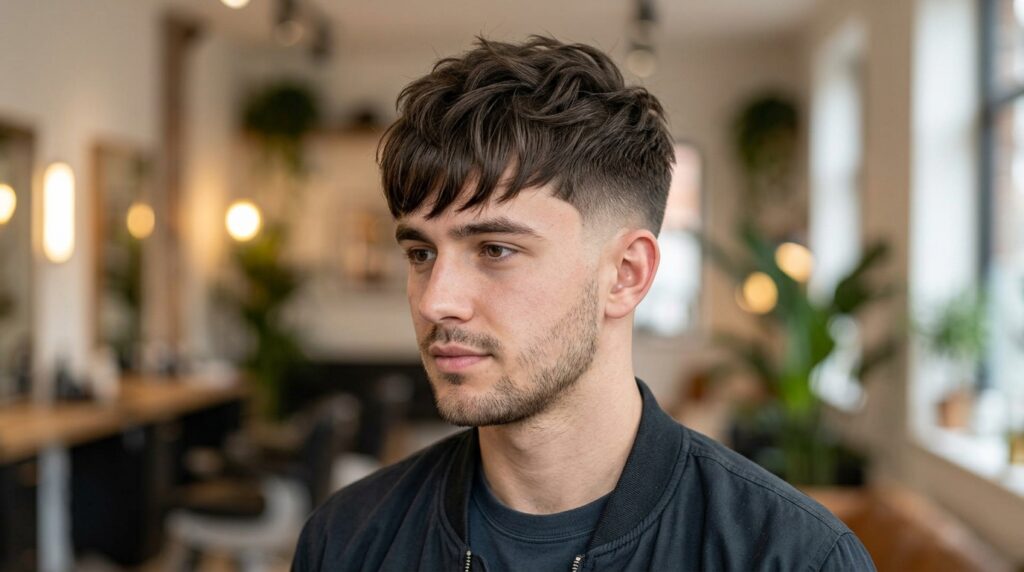
A beard and a low taper blend nicely. The taper fades into the sideburns, then connects to the beard line. This creates a smooth, natural flow from head to face.
Ask your barber to match the fade height with the beard. Keep the beard trimmed and use beard oil to avoid dryness. A fuller beard can balance a longer fringe.
Best for: Round and oval faces, men who want a rugged but tidy look.
Short Textured Fringe with Low Taper

This is the easiest version to manage. The top is short, about 2 to 3 inches, with light texture. The low taper keeps everything clean.
It works well for men who want a quick routine. A dab of matte paste is all you need. It also grows out gracefully, so you can stretch the time between cuts.
Best for: Busy guys, work-friendly looks, all hair types.
Textured Fringe Low Taper with Mullet

The modern mullet is not the old joke. It is softer and more controlled. The top has a textured fringe, the sides have a low taper, and the back stays slightly longer.
Ask for a gentle length at the nape instead of a big contrast. Use a sea salt spray to add shape. This cut makes a statement without going too extreme.
Best for: Wavy and curly hair, creative and bold dressers.
What Is Low Taper Fade Textured Fringe

A low taper fade textured fringe is a haircut with two parts. The first part is a low taper on the sides and back. The second part is a longer, choppy fringe on top.
The taper starts just above the ear and follows the natural hairline. The hair gets shorter as it moves down, but it does not drop to skin. This is what makes it a “taper” and not a full fade.
The textured fringe is cut with layers or razor work. This gives the hair a broken, lived-in feel. The front falls over the forehead in a soft, loose way.
| Part of the Cut | What It Looks Like |
| Sides and back | Gradual taper that stays close to the natural hairline |
| Top | Layered, textured, and longer than the sides |
| Fringe | Short to medium bangs that fall forward |
| Finish | Matte, natural, and slightly messy |
Low Taper Fade vs Mid Taper for Textured Fringe

Both tapers work with a textured fringe. The main difference is where the fade starts. That small change can shift the whole look of the cut.
A low taper begins near the ear and neckline. A mid taper begins around the temple, a bit higher. The higher the taper, the more contrast you see.
| Feature | Low Taper | Mid Taper |
| Starting point | Near the ear and nape | Around the temple |
| Contrast | Soft and subtle | Medium and sharper |
| Grow out | Very clean | Needs touch-ups sooner |
| Best for | Office and daily wear | Trend-forward looks |
Low Taper Fade Textured Fringe
The low taper is the safer choice. It keeps the sides neat without drawing attention. It pairs well with longer fringes and curly hair because it does not shrink the top too much.
It is also easier to maintain. Because the fade is small, the cut looks fresh for longer. If you are new to tapers, start here.
Mid Taper Fade with Textured Fringe
The mid taper fade is a step up in drama. The fade reaches higher on the head, which makes the top look fuller by contrast. It gives a sharper, more athletic look.
Choose it if you like a bold shape. Just plan on visits every three to four weeks to keep the line clean. It works well on thick hair and strong jawlines.
Textured Fringe Low Taper from Different Angles
A good haircut should look good from every side. The front shows the style. The back shows the skill. Checking both helps you pick the right cut and talk to your barber.
Front View of a Textured Fringe Low Taper
From the front, you see the fringe and how it frames your face. It should sit just above or on the eyebrows. The strands should look broken up, not like one flat curtain.
The temples should look clean, with a light taper that follows the hairline. A good front view has balance. The top has volume, the sides stay slim.
Back View and Tapered Finish
The back view shows the taper. The hair should shorten smoothly from the crown down to the neck. There should be no harsh lines or patchy spots.
The neckline can be natural or lightly squared. A natural neckline grows out better. A squared one looks sharper right after the cut. Ask your barber to blend the back into the top with no gaps.
How to Style a Low Taper Fade Textured Fringe
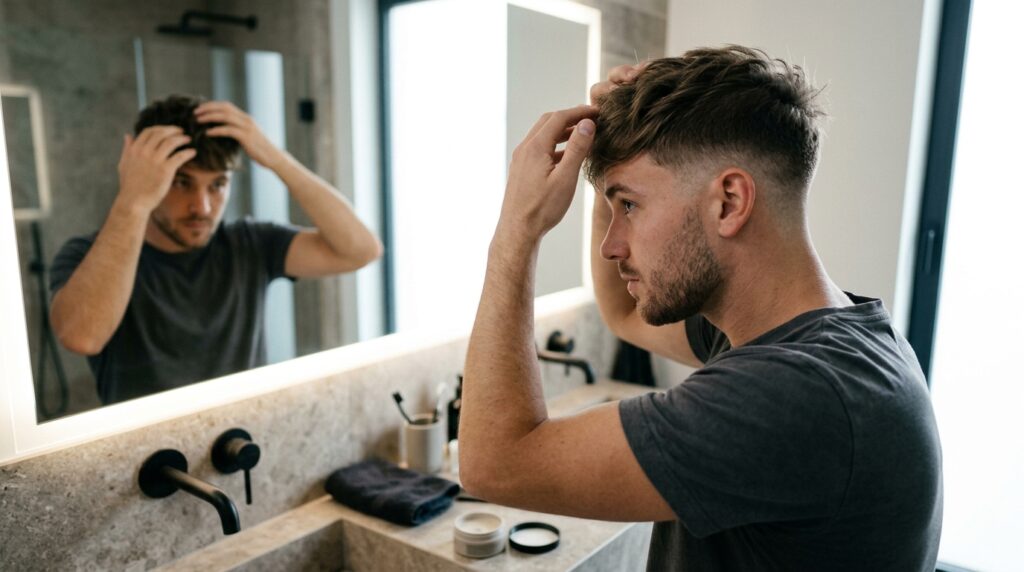
Styling is simple once you know the basics. You only need a few products and a few minutes. The goal is texture, not shine.
Here is a basic routine:
- Wash and towel dry your hair until it is damp.
- Apply a pre-styler, like sea salt spray or mousse.
- Blow dry the top, pushing the hair forward.
- Add a small amount of matte product.
- Shape the fringe with your fingers.
Creating Texture and Definition
Texture comes from the right product and the right technique. Use a pea-sized amount of clay or paste. Warm it in your hands first so it spreads evenly.
Rake your fingers through the top and pull a few strands forward. Twist the ends for definition. Finish with a light mist of hairspray if you need all-day hold.
Styling Straight, Wavy, and Curly Hair
Each hair type needs a slightly different approach. Use this table as a quick guide.
| Hair Type | Best Prep | Best Product | Finish |
| Straight | Blow dry with root lift | Texture powder and matte clay | Matte, piecey |
| Wavy | Scrunch and air dry | Mousse or light cream | Soft and natural |
| Curly | Apply to damp hair, diffuse | Curl cream or gel | Defined and bouncy |
Do not overload your hair with products. Start small and add more only if needed. Curly hair especially needs moisture, so skip heavy waxes.
The Evolution of Low Taper Fade Textured Fringe
Tapered cuts have been around for decades. Classic barbershops used them for clean, short styles in the 1950s and 60s. The sides were short and the top was neat and combed.
In the 2010s, fades became bolder. Skin fades and high contrast cuts took over. Then, around the early 2020s, men started asking for softer looks. The textured crop and the messy fringe became popular.
Today, the low taper fade fringe sits between those two worlds. It keeps the cleanliness of a fade and adds the ease of a natural top. In 2026, we are also seeing more mid-length tops and soft mullet hints. The trend is moving toward hair that looks real, not overworked.
Choosing the Right Fit for Your Face Shape
The best haircut flatters your face. Pick the fringe length and top volume based on your shape. A good barber can adjust the cut to fit you.
| Face Shape | Best Version | Why It Works |
| Oval | Almost any style | Balanced shape suits everything |
| Round | Longer top with volume | Adds height and slims the face |
| Square | Messy or side-swept fringe | Softens strong angles |
| Long or oblong | Blowout or French crop | Shortens the look of the face |
| Heart | Fluffy or mid-length fringe | Balances a wider forehead |
Hair type matters too. Thick hair handles heavy texture well. Fine hair looks better with volume and light layers. If you have a receding hairline, a forward fringe can help hide it.
Maintenance Tips to Keep the Cut Sharp
A low taper needs regular care to stay clean. The good news is that it grows out well. Most guys need a trim every four to six weeks.
Follow these simple tips:
- Book regular trims: Keep the neckline and taper fresh.
- Wash smart: Use shampoo two or three times a week. Overwashing dries out your hair.
- Use a good conditioner: This helps curly and wavy hair stay soft.
- Protect from heat: Use a heat spray before you blow dry.
- Sleep well: A silk pillowcase can reduce frizz and bedhead.
- Clean your products off: Buildup makes hair look flat.
Talk to your barber each visit. Bring a picture and tell them what you liked and what you did not. Small notes help them get it right every time.
Frequently Asked Questions
What is a low taper fade with a textured fringe?
It is a haircut with a gradual low taper on the sides and back and a layered, choppy fringe on top.
Is a low taper or a mid taper better for a textured fringe?
A low taper is softer and easier to maintain. A mid taper is bolder and gives more contrast.
Can curly hair get a low taper fade textured fringe?
Yes. Curly hair works very well with this cut. The taper keeps the sides neat while the curls stay full on top.
How often should I get a trim for a low taper fade?
Most people need a trim every four to six weeks to keep the taper and neckline clean.
What product is best for styling a textured fringe?
A matte clay or paste works best for most hair types. Use curl cream for curly hair and sea salt spray for extra texture.
Final Thoughts
The low taper fade textured fringe is a smart pick for almost anyone. It stays clean and neat on the sides while keeping the top loose, natural, and easy to style. With 12 different versions to choose from, you can easily find one that suits your hair type, your face shape, and your daily routine, whether you prefer a polished look for the office or a relaxed one for the weekend.
Start with the version that feels closest to your own style, and adjust it as you go. Use the right styling products, keep up with regular trims, and give your barber clear details about what you want. With these simple steps, you can walk into 2026 with a sharp, confident look.

William Foster is a hair and beauty content writer at Easy Faxhion, sharing practical information about hairstyles, hair care, grooming, and styling. He focuses on clear, reader friendly articles supported by careful research and thoughtful content development, helping readers discover useful ideas and make informed everyday hair care choices.