
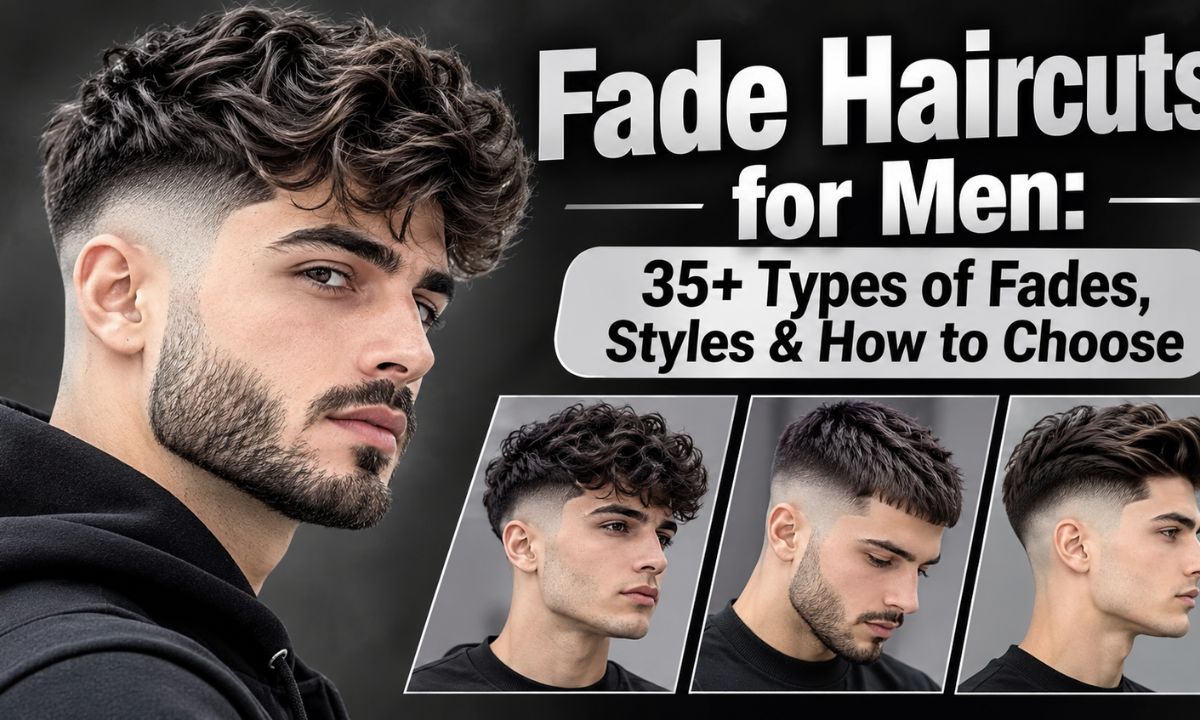
Fades are everywhere. You see them at the gym, at the office, and on the field. They look clean, sharp, and fresh. They also work on almost every hair type.
But there is a problem. The word “fade” covers a lot of ground. A low fade, a drop fade, and a burst fade are all different cuts. If you walk into a barbershop and only say “give me a fade,” you may not get what you picture.
This guide fixes that. You will learn how fade names work, how to compare your options, and how to pick a style that suits your hair, your face, and your routine. You will also get clear words to use with your barber.
How Fade Haircut Names Actually Work
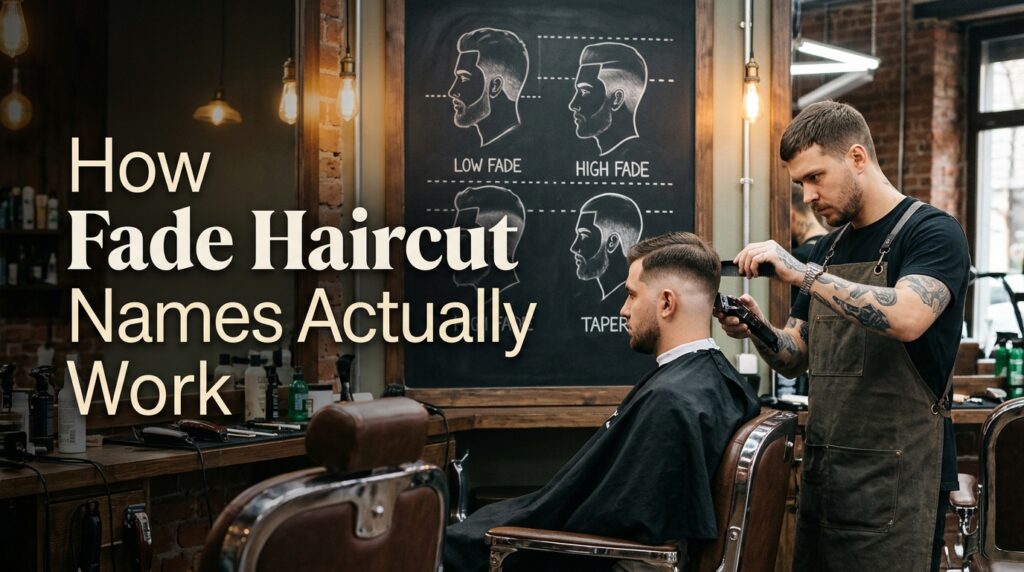
A fade is a haircut where the hair gets shorter as it moves down the sides and back of your head. The change is smooth. There is no hard line. The hair blends from longer to shorter in a soft gradient.
Most faded names tell you three things. They tell you where the fade starts, how short it gets, and how it moves around your head. Once you know that, the names stop feeling like a secret code.
Here is a simple way to read a fade name:
- Height words like low, mid, and high tell you where the fade begins.
- Length words like skin, bald, and shadow tell you how short the hair gets at the bottom.
- Shape words like drop, burst, and temple tell you how the fade curves around your head.
So a “low skin fade” starts low and goes down to bare skin. A “mid burst fade” starts at the middle and curves around the ear. Simple.
Types of fades
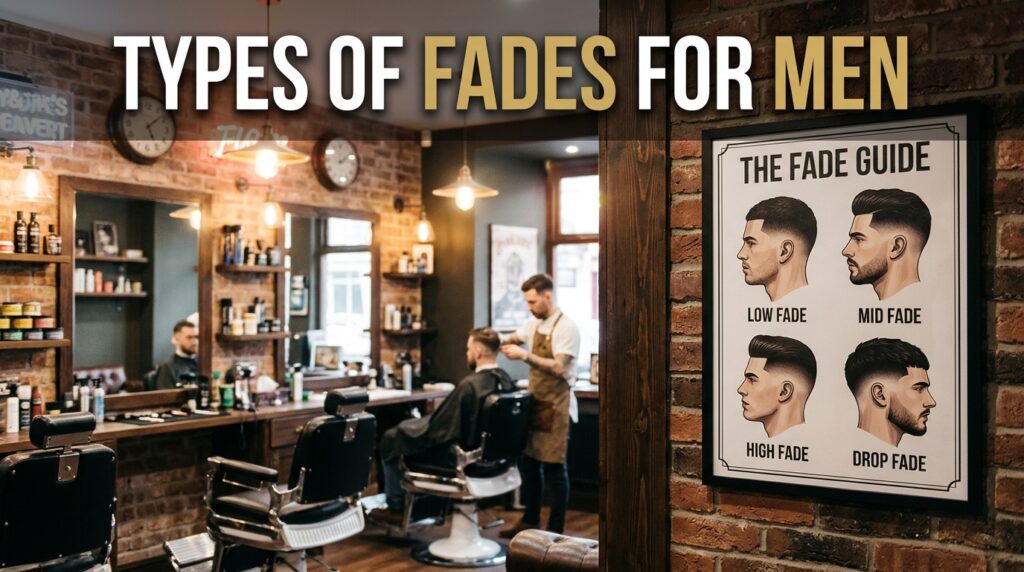
There are many types of fades, but they all come from a few basic ideas. Each fade is a mix of height, length, and path. Change one of those and you get a new look.
Think of it like ordering coffee. You pick the size, the strength, and the milk. A fade works the same way. You pick the start point, the end length, and the shape.
Barbers also use clippers with guards and sometimes a straight razor to get the blend. The skill is in the blending. A good fade has no stripes or sudden steps. It looks like a smooth shadow.
Different types of fades
The different types of fades fall into a few groups. Knowing the groups helps you narrow your choices fast.
| Group | What It Means | Examples |
| By height | Where the fade starts on your head | Low, mid, high |
| By length | How short the bottom gets | Skin, shadow, taper |
| By path | How the fade moves around your head | Drop, burst, temple |
| By top style | What you do with the hair on top | Crop, quiff, pompadour |
Most men mix two or three of these. For example, you might pick a mid height, a skin bottom, and a textured crop on top. That is a full haircut, built piece by piece.
Types of fades for men
The types of fades for men are not different from those for anyone else. But men often ask for specific things. They want a clean neckline. They want a cut that grows out well. They want something that works with a beard.
Here are the most common goals men have when they ask for a fade:
- A sharp, neat look for work
- A low-effort cut that stays tidy for weeks
- A bold style for a night out
- A way to blend sides into a beard
- A cut that suits thinning hair or a receding hairline
Keep your main goal in mind. It will guide every choice below.
Fade cuts
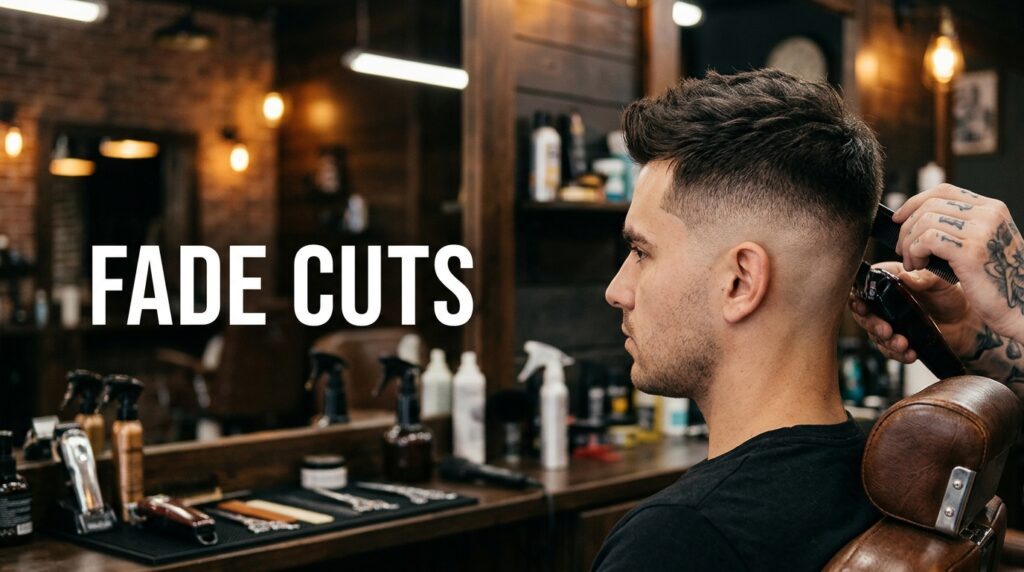
Fade cuts are popular because they flatter so many people. They make the sides look tidy and keep the top interesting. The contrast draws the eye up and gives your face a clean frame.
They also give you room to play. You can keep the top long and wild, or short and neat. The fade stays the same, and the style changes.
One thing to know: fades grow out fast. Because the sides are very short, you notice new growth in about two weeks. That is part of the deal. Plan on regular visits if you like the crisp look.
Compare your preferences first
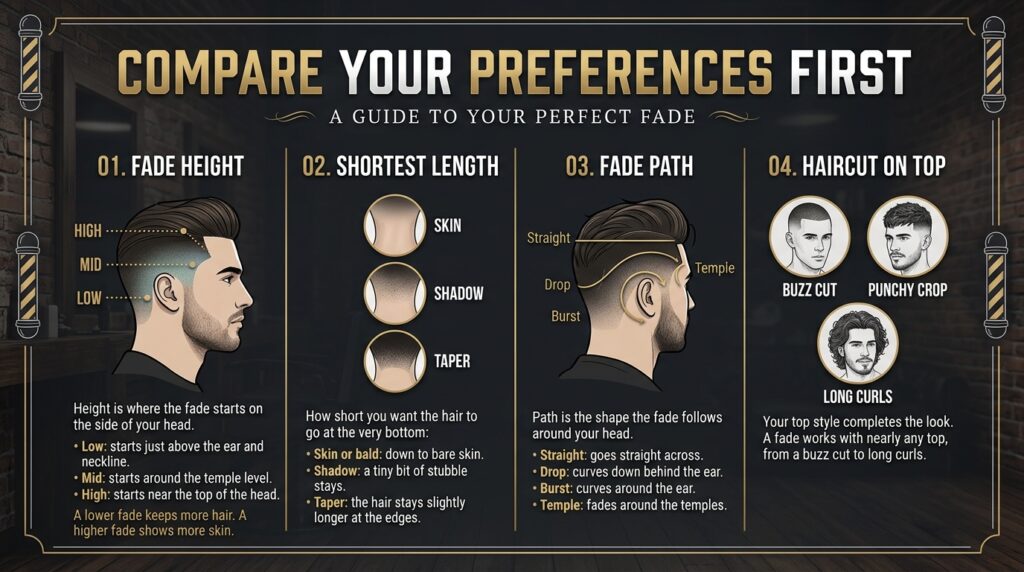
Before you pick a name, think about what you want. Four choices matter most. Answer these and you will know what to ask for.
1. Fade Height
Height is where the fade starts on the side of your head.
- Low: starts just above the ear and neckline. Subtle and safe.
- Mid: starts around the temple level. Balanced and flexible.
- High: starts near the top of the head. Bold and very clean.
A lower fade keeps more hair. A higher fade shows more skin. If you are new to fades, a low or mid height is a gentle start.
Read More: Burst Fade vs Drop Fade
2. Shortest Length
This is how short the hair gets at the very bottom.
- Skin or bald: down to bare skin. The sharpest look.
- Shadow: a tiny bit of stubble stays. Softer than skin.
- Taper: the hair stays slightly longer at the edges.
Skin fades look striking but need more upkeep. Shadow fades hide regrowth better.
3. Fade Path
Path is the shape the fade follows around your head.
- Straight: the fade runs level around the head.
- Drop: the fade curves down behind the ear.
- Burst: the fade makes a rounded arc around the ear.
- Temple: the fade focuses on the temples and sideburns.
Path changes how the cut looks from the side and back. It is a small detail that makes a big difference.
4. Haircut on Top
Your top style completes the look. A fade works with nearly any top, from a buzz cut to long curls.
Pick the top based on your hair type and how much time you want to spend. Short tops are easy. Long tops need product and styling. Textured tops sit in between.
Fade Haircuts at a Glance
Use this chart as a quick guide. It compares the main fades side by side.
| Fade | Starts At | Bottom Length | Best For | Upkeep |
| Low Fade | Just above ear | Skin or short | Office, first-timers | Medium |
| Mid Fade | Temple level | Skin or short | Most men | Medium |
| High Fade | Upper side | Skin | Bold, modern looks | High |
| Skin Fade | Any height | Bare skin | Sharp contrast | High |
| Shadow Fade | Any height | Light stubble | Soft, natural look | Medium |
| Drop Fade | Curves low behind ear | Short or skin | Clean back view | Medium |
| Burst Fade | Around the ear | Short or skin | Mohawks, mullets | Medium |
| Temple Fade | Temples and sideburns | Short | Line ups and waves | High |
| Taper | Edges only | Short but not bare | Classic, conservative | Low |
| Zero Fade | Any height | Zero guard | Crisp, bare finish | High |
The 10 Core Types of Fade Haircuts
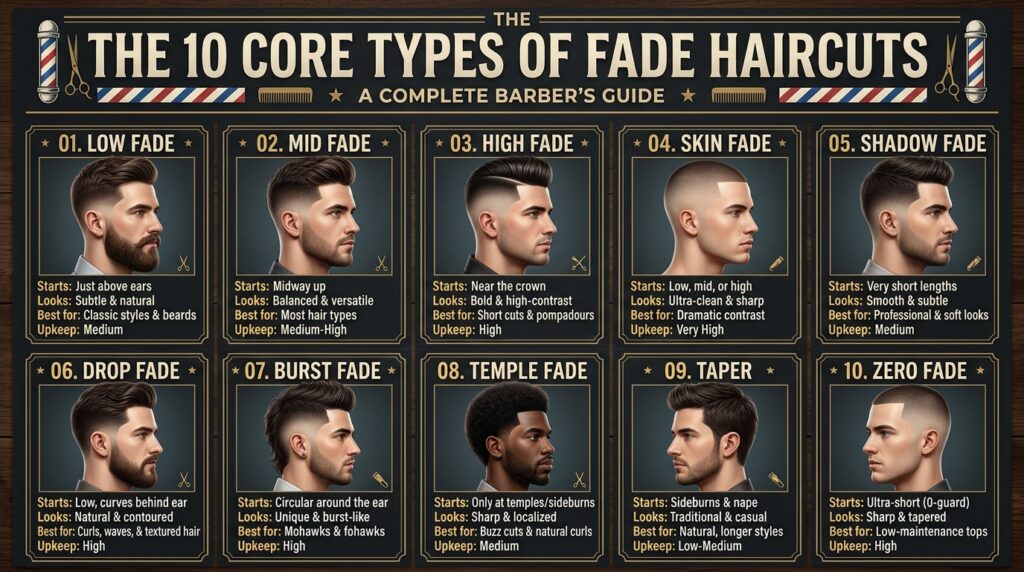
These ten styles are the base of almost every fade. Learn them and the rest of the list will make sense.
1. Low Fade
The low fade starts just above the ear and wraps toward the back of the neck. It leaves more hair on the sides than other fades. That makes it soft and easy to wear.
It is a great choice if you want a neat look without a big change. It works in an office, at school, and at home. It also grows out gracefully.
Low Fade Quick Facts
- Starts: just above the ear
- Looks: subtle and polished
- Best for: beginners, professional settings
- Upkeep: a trim every 3 to 4 weeks
2. Mid Fade
The mid fade begins around the temple. It sits right between low and high. It shows a clear fade without going too bold.
This is the most flexible fade. It suits short tops, long tops, curls, and straight hair. If you can only learn one name, learn this one.
Mid Fade Quick Facts
- Starts: around the temple
- Looks: balanced and modern
- Best for: almost everyone
- Upkeep: a trim every 2 to 3 weeks
3. High Fade
The high fade starts high on the sides, near the top of the head. It shows a lot of skin or very short hair. The contrast is strong.
This cut looks sharp and athletic. It also makes the top hair stand out. It works well with pompadours, quiffs, and curly tops.
High Fade Quick Facts
- Starts: high on the sides
- Looks: bold and clean
- Best for: men who like strong contrast
- Upkeep: a trim every 2 weeks
4. Skin Fade or Bald Fade
A skin fade goes all the way down to bare skin. Barbers often use a foil shaver at the bottom to get a smooth finish. The two names mean the same thing.
You can have a low, mid, or high skin fade. The skin part is the bottom, not the height. This is why people mix up the names.
Skin Fade Quick Facts
- Bottom: bare skin
- Looks: crisp and sharp
- Best for: men who want max contrast
- Upkeep: a touch-up every 2 weeks
5. Shadow Fade
A shadow fade stops just before bare skin. A little stubble stays. It looks like a soft shadow on the sides.
This one is kinder to your skin and to your schedule. Regrowth is harder to spot. It is a good pick if your barber visits are not weekly.
Shadow Fade Quick Facts
- Bottom: very short stubble
- Looks: soft and natural
- Best for: men who want a clean but gentle cut
- Upkeep: a trim every 3 weeks
6. Drop Fade
The drop fade curves down behind the ear. The line sits higher at the front and dips lower at the back. It follows the shape of your skull.
This gives a clean look from behind. It also adds a little drama. Drop fades pair well with longer tops and curls.
Drop Fade Quick Facts
- Shape: curves down behind the ear
- Looks: smooth and stylish
- Best for: longer or curly tops
- Upkeep: a trim every 2 to 3 weeks
7. Burst Fade
The burst fade makes a half circle around the ear. The hair stays longer at the back, which lets you keep length there. It is popular with mohawks and mullets.
It looks bold and a bit rebellious. It is also a good way to keep length at the nape. If you want a fade with personality, try this one.
Burst Fade Quick Facts
- Shape: rounded arc around the ear
- Looks: edgy and fun
- Best for: mohawks, mullets, faux hawks
- Upkeep: a trim every 2 to 3 weeks
8. Temple Fade
The temple fade, also called a temp fade, focuses on the temples and sideburns. The hair is cut very short in that spot and often lined up sharply.
It is common with waves and short curls. It frames the face and gives a very neat edge. It needs regular line ups to stay crisp.
Temple Fade Quick Facts
- Focus: temples and sideburns
- Looks: sharp and detailed
- Best for: waves, short curls, line ups
- Upkeep: a touch-up every 1 to 2 weeks
9. Taper
A taper is a gentler cousin of the fade. The hair gets shorter around the ears and neckline, but it does not go down to skin. The change is slower and more subtle.
It is a classic cut. It looks professional and traditional. It is also the easiest of the fades to keep up.
Taper Quick Facts
- Bottom: short but not bare
- Looks: classic and tidy
- Best for: conservative workplaces
- Upkeep: a trim every 4 weeks
10. Zero Fade
A zero fade means the clipper blends all the way down to zero. That is the bare blade, with no guard. The result is a very smooth, clean finish.
It is close to a skin fade. Many barbers use the names almost the same way. The main point is that the bottom is as short as it can get.
Zero Fade Quick Facts
- Bottom: zero guard, near skin
- Looks: crisp and polished
- Best for: men who want a sharp edge
- Upkeep: a touch-up every 2 weeks
24 Popular Fade Haircut Combinations
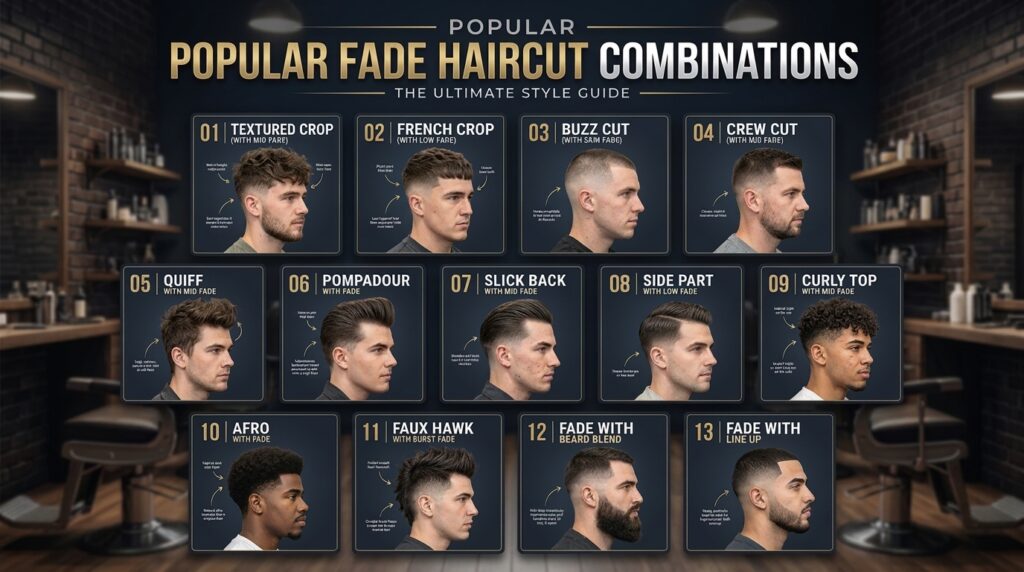
Now let’s add a top style. The fade is the base. The top is what makes the cut yours. Here are the most popular pairings.
11. Textured Crop With Mid Fade
A short, choppy top sits on a mid fade. The texture adds movement. It is easy to style with a bit of paste or clay. This is a great everyday cut.
12. French Crop With Low Fade
The French crop has a short, blunt fringe across the forehead. Paired with a low fade, it looks neat and a bit European. It works well for straight or wavy hair.
13. Buzz Cut With Skin Fade
The whole top is clipped short, and the sides fade to skin. It takes almost no styling. It suits men who want a clean, no-fuss look.
14. Crew Cut With Mid Fade
The crew cut is short on top and a touch longer at the front. A mid fade keeps the sides tidy. It is a timeless, sporty cut.
15. Quiff With Mid Fade
The quiff lifts the front hair up and back. With a mid fade, it looks confident and styled. You will need a blow dryer and some product.
16. Pompadour With Mid or High Fade
The pompadour is tall and swept back, with volume at the front. A mid or high fade makes it pop. It is a bold, retro look with a modern edge.
17. Slick Back With Mid Fade
The top is combed straight back with pomade. The mid fade keeps the sides sharp. It looks smart and works well with a suit.
18. Side Part With Low Fade
A neat side part with a low fade is the classic office look. It is clean and trustworthy. A bit of light product keeps it in place.
19. Comb Over With Low or Mid Fade
The hair is swept to one side with a defined part. The fade keeps the sides crisp. It is a flexible cut that suits many ages.
20. Messy Fringe With Low Fade
The fringe falls loosely across the forehead. A low fade keeps the sides neat. The look is relaxed and youthful, and it takes little time.
21. Textured Fringe With Mid Fade
This one adds more shape and separation to the fringe. A mid fade gives a stronger contrast. It is popular with younger men and students.
22. Curly Top With Mid Fade
Natural curls stay full on top while the sides are faded. This keeps curls from looking too wide. A leave-in cream helps define the curls.
23. Coily Top With Drop Fade
Tight coils on top look great with a drop fade. The curve behind the ear adds shape. It highlights the natural texture of the hair.
24. Afro With Fade
A rounded afro sits above a clean fade. The fade shapes the sides and makes the afro look sculpted. A high or mid fade is common here.
25. Burst Fade Mullet
The top and back stay long, and the burst fade clears the sides around the ears. It is a fresh take on the mullet. It looks bold and modern.
26. Faux Hawk With Burst Fade
The center hair is styled up into a ridge, and the burst fade clears the sides. It gives you a mohawk feel without going all the way. It is easier to wear to work.
27. Mohawk With Burst or High Fade
A true mohawk keeps a strip of long hair down the middle. The burst or high fade clears the sides. It makes a loud statement.
28. Edgar With Low or Mid Fade
Edgar has a blunt, straight fringe across the forehead. A low or mid fade frames it. It is popular with thick, straight, or wavy hair.
29. Hard Part With Mid Fade
A shaved line marks the part, and the top sweeps over it. The mid fade completes the look. It is sharp and polished, and it needs a skilled barber.
30. Waves With Temple or Low Fade
This pairing suits men who brush their hair into waves. The temple or low fade keeps the edges crisp. Waves need daily brushing and moisture.
31. Braids With Fade
Braids, twists, or cornrows can sit on top of a fade. The fade keeps the sides clean. It is a neat, stylish way to wear protective styles.
32. Long Top With Drop Fade
If you want length on top, this works well. The drop fade keeps the sides slim and the back tidy. It is a good way to grow your hair without looking messy.
33. Undercut Fade
An undercut has a sharp split between long top hair and very short sides. Add a fade and the split softens. It is a mix of drama and polish.
34. Fade With Beard Blend
The fade on your head flows into your beard. There is no hard stop at the sideburns. It looks smooth and keeps a full beard from looking heavy.
35. Ivy League With Taper Fade
A short, side-parted top with a gentle taper. It is clean and academic. It is also one of the lowest-maintenance options here.
36. Caesar Cut With Low Fade
Caesar has short, even hair with a small fringe at the front. A low fade adds a modern touch. It works well for men with a receding hairline.
37. Fade With Line Up
A line up sharpens the hairline, temples, and sideburns with a razor. Paired with any fade, it gives a very crisp frame. It does need a refresh every one to two weeks.
38. Fade With Designs
Some barbers carve lines, shapes, or patterns into the fade. It is a creative option. Keep in mind that designs grow out quickly.
Best low fade Haircuts for men
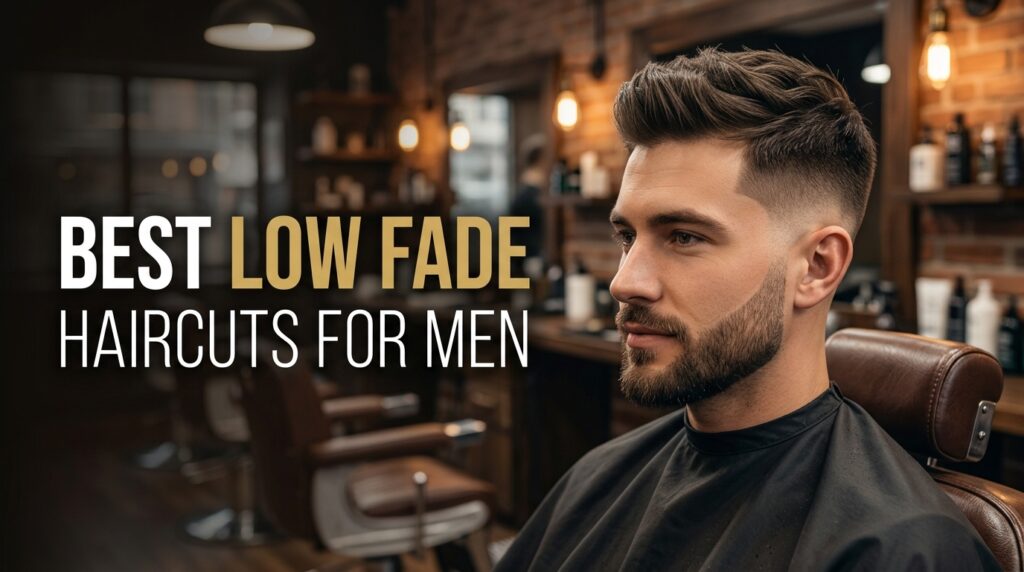
If you like soft, subtle styles, a low fade is the way to go. Here are the best low fade haircuts for men and who they suit.
| Style | Why It Works | Good For |
| Low fade with side part | Neat and classic | Office and formal events |
| Low fade with textured crop | Easy to style | Busy mornings |
| Low fade with messy fringe | Relaxed and modern | Casual looks |
| Low fade with curls | Keeps curls tidy | Wavy and curly hair |
| Low fade with beard | Blends well | Men with full beards |
Low fades are forgiving. If your barber’s blend is a little off, it is harder to see. They also stay neat for longer than higher fades.
Low fade haircut
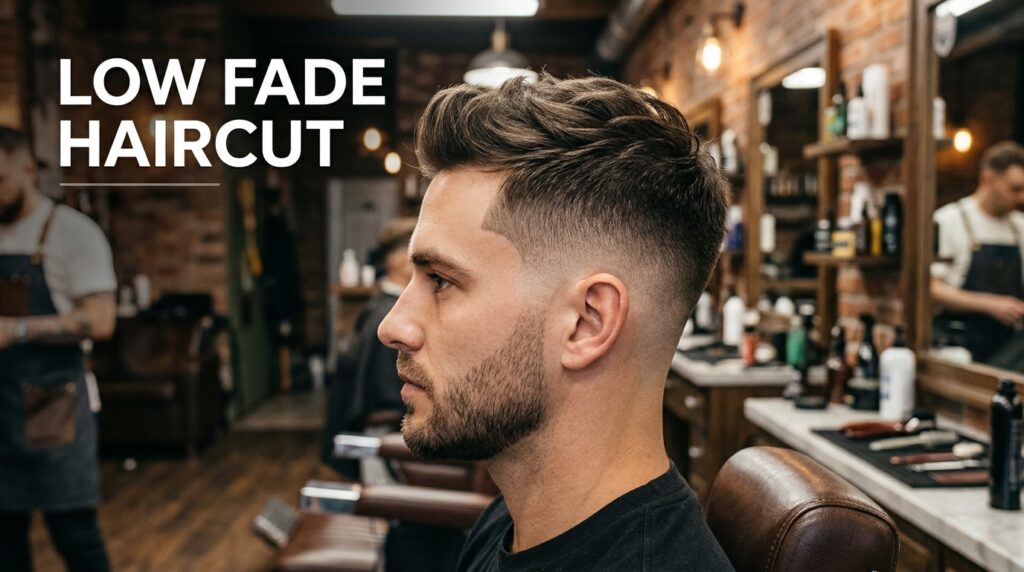
A low fade haircut is simple. The sides and back get short, starting just above the ear. The top stays as you like it.
Here is what to expect in the chair:
- The barber trims the top to your chosen length.
- The sides are clipped with shorter and shorter guards as they move down.
- The edges are cleaned around the ear and neck.
- You may get a light line up for sharpness.
The whole cut takes about 30 to 45 minutes. A low fade is a safe first fade because the change is gentle. If you like it, you can go higher next time.
Mid fade Haircuts for men
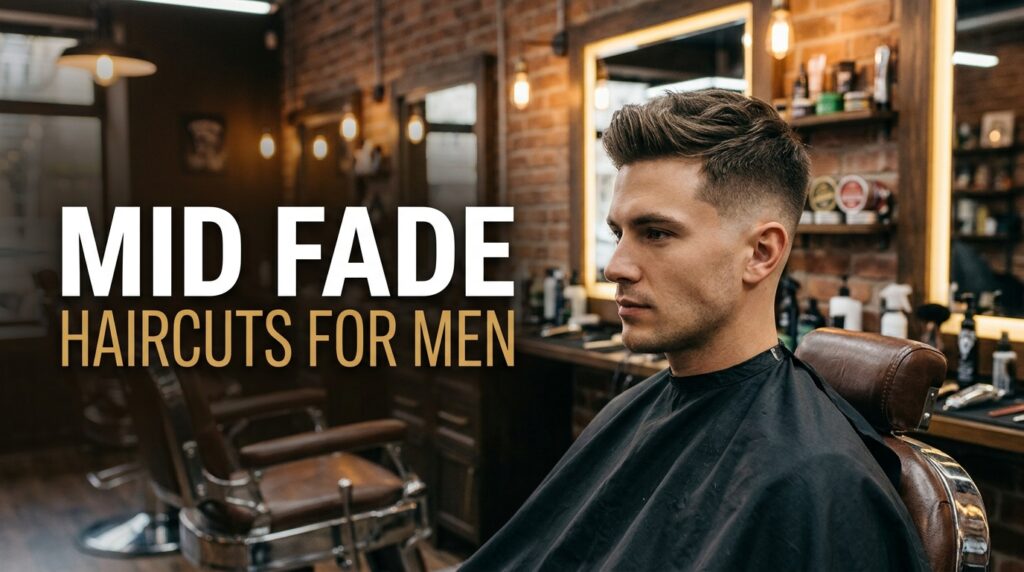
Mid-fade haircuts for men are the all-rounders. They start around the temple and give a clean contrast without feeling extreme. They look good on most face shapes.
Popular picks include:
- Mid fade with textured crop: easy and trendy
- Mid fade with quiff: sharp and lively
- Mid fade with slick back: smart and clean
- Mid fade with curls: shaped and tidy
- Mid skin fade with beard: bold and neat
If you are not sure which height to pick, go mid. It is the most flexible choice. You can always change it next time.
Best fade haircuts for men
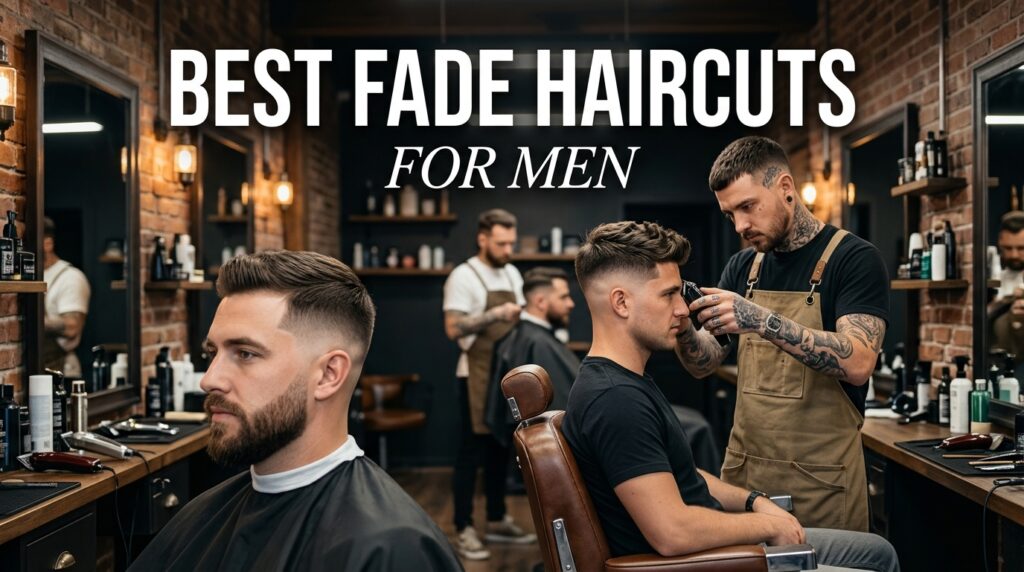
The best fade haircuts for men depend on your hair, your face, and your life. Still, a few cuts win again and again because they are easy to wear and easy to style.
Here are the top picks:
- Mid fade with textured crop. Great for almost anyone.
- Low fade with side part. Perfect for formal settings.
- High fade with pompadour. Great for a bold look.
- Drop fade with curls. Great for natural texture.
- Taper with short top. Great for low upkeep.
A good haircut is the one you will actually keep up. Pick a style that fits your routine, not just your photos.
Low fade haircuts for men
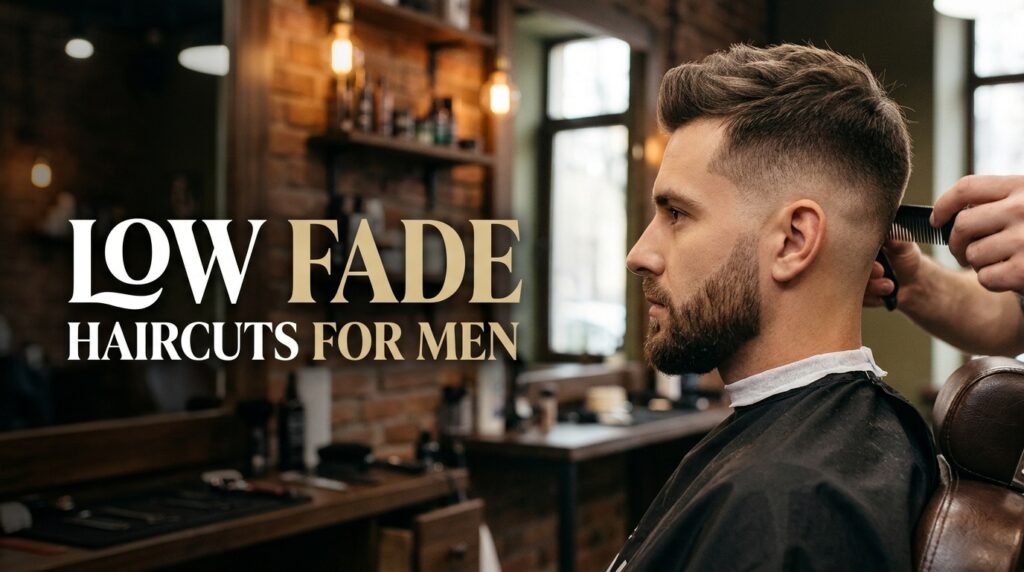
Low fade haircuts for men suit those who want to look sharp without a big change. They keep the sides fuller. That gives a softer outline.
They also work well if you have a rounder or fuller face. A low fade does not cut the face into harsh sections. It simply tidies the edges.
If you wear a beard, a low fade blends well into it. Ask your barber to match the beard length to the fade. The result looks smooth and planned.
Medium fade haircuts for men
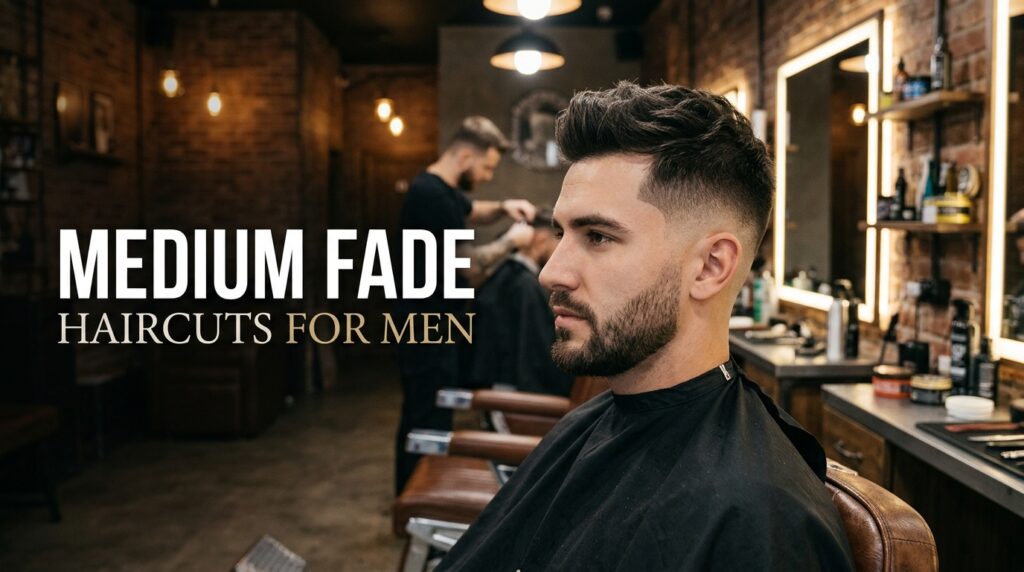
Medium fade haircuts for men are another name for mid fades. Some people also use “medium” to mean a fade that stays at a medium length at the bottom, not skin.
So when you ask for one, be clear. Say where the fade starts and how short it goes. You can say, “mid height, down to a number one guard,” for example.
This keeps things simple. Your barber will know exactly what you want. That avoids surprises.
Short fade haircuts for men
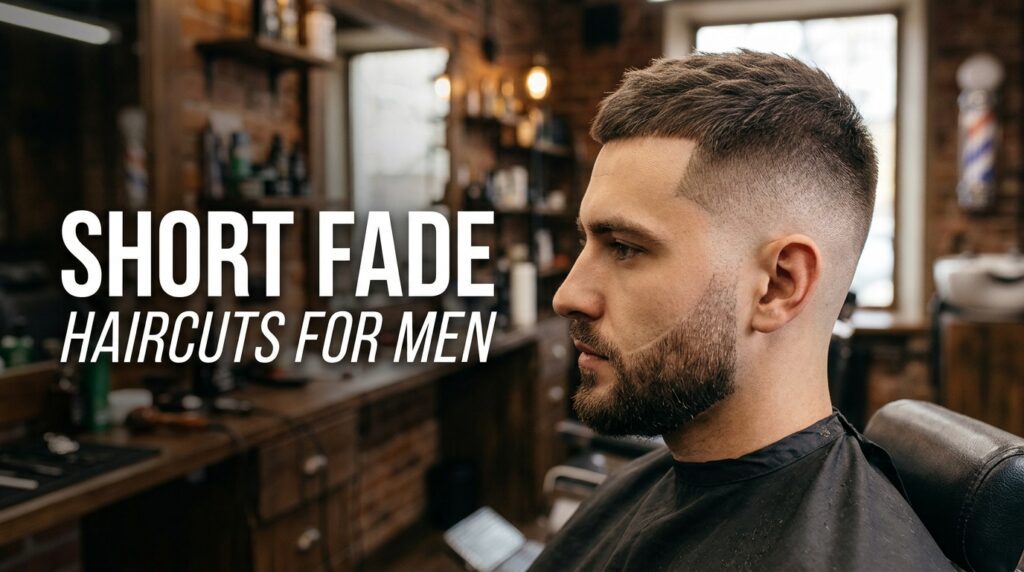
Short fade haircuts for men keep everything neat and compact. The top is cut short, and the sides fade tight. These cuts are quick to style and easy to wash.
Great short options include:
- Buzz cut with a skin fade
- Crew cut with a mid fade
- Ivy League with a taper
- Caesar cut with a low fade
- Short textured crop with a low fade
Short fades suit hot weather, gym routines, and busy schedules. They are also a smart pick for thinning hair. Shorter hair hides gaps well.
Fade haircuts for men long hair
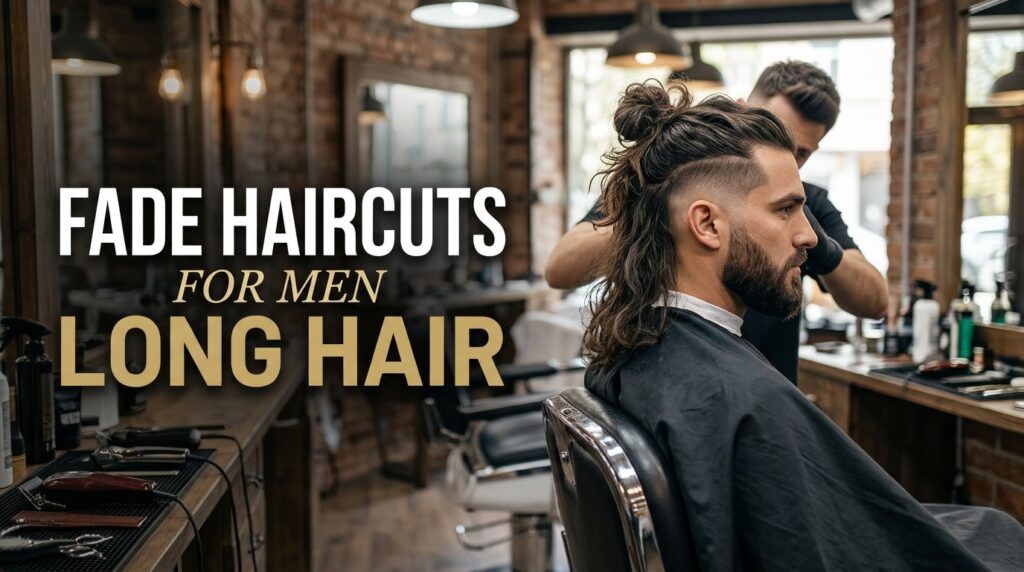
Yes, you can pair a fade with long hair. Fade haircuts for men with long hair mix length on top with tight sides. The contrast looks great.
Try these:
- Long top with a drop fade: keeps sides slim
- Undercut fade: sharp split between top and sides
- Burst fade mullet: length at the back, clean around the ears
- Man bun with a high fade: tidy and practical
To keep long hair healthy, trim the ends every six to eight weeks. Use a good conditioner. And keep the fade fresh every few weeks so the shape does not get lost.
Which Fade Works With Your Hair Texture?
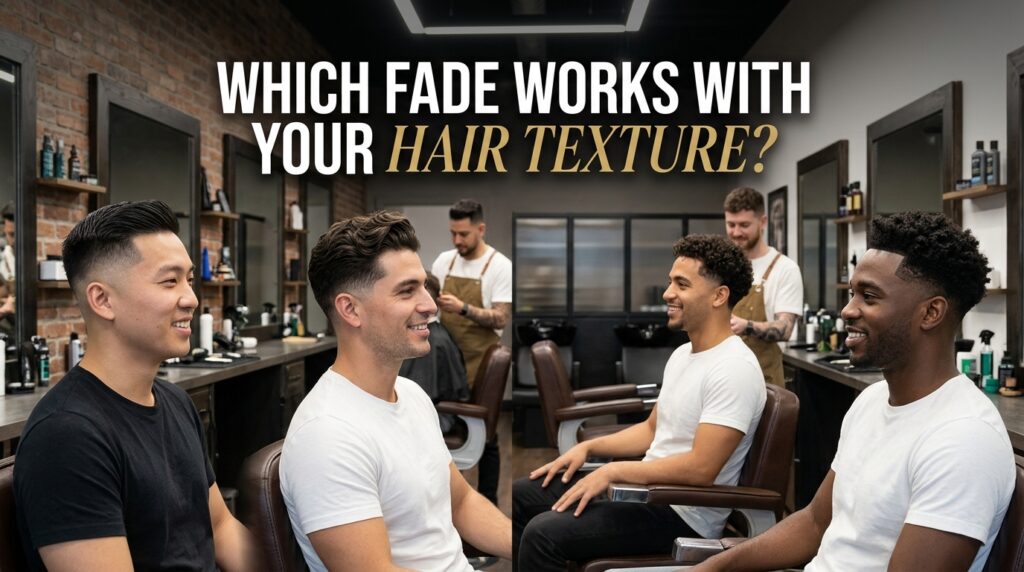
Your hair type changes how a fade looks and how easy it is to style. Here is a simple guide.
Straight Hair
Straight hair shows every line. That means the blend must be clean. It works well with crops, side parts, and slick backs.
Thick straight hair can stick out at the sides. A fade fixes that by keeping the sides short. Use a light paste for hold.
Wavy Hair
Wavy hair has natural movement. A fade keeps the sides from puffing out. It pairs well with textured crops, quiffs, and messy fringes.
Use a sea salt spray or light cream to boost the waves. Avoid heavy gel. It can flatten the pattern.
Curly Hair
Curly hair can get wide and round. A mid or low fade controls the bulk on the sides. The curls on top stay full and defined.
Keep your curls moisturized. A leave-in cream and a diffuser can help. Ask your barber not to cut the curls too short on top.
Coily Hair
Coily hair has tight, springy curls. It fades beautifully and holds a sharp line. Drop fades, temple fades, and high fades all work well.
Coily hair needs a lot of moisture. Use a rich cream or oil. A durag or satin cap at night helps protect the shape and keeps waves smooth.
Does Face Shape Decide Which Fade You Should Get?
Face shape can help, but it does not decide everything. Think of it as a hint, not a rule. Your hair type and lifestyle matter just as much.
Here is a simple guide:
| Face Shape | Fade Tips |
| Oval | Almost any fade works. Try a mid fade. |
| Round | Add height on top. Try a high or mid fade. |
| Square | A low or mid fade softens the jaw. |
| Heart | Keep the sides fuller. A low fade works well. |
| Long | Avoid too much height. A low fade with a fringe helps. |
If you are unsure, show your barber your face shape and ask. A good barber will suggest something that suits you. Trust your own eyes too. If you like how it looks, it works.
Fade vs Taper: What’s the Difference?
People mix up fades and tapers all the time. They are close, but not the same.
A fade goes much shorter. It often reaches skin and covers a larger area of the sides. The change is dramatic and clean.
A taper only shortens the edges around the ears and neckline. It does not usually go to skin. The change is mild.
| Feature | Fade | Taper |
| How short | Down to skin or very short | Short but not bare |
| Area covered | Large part of sides and back | Edges and neckline |
| Look | Bold and sharp | Soft and classic |
| Upkeep | Higher | Lower |
| Best for | Modern, high-contrast looks | Conservative, simple looks |
If you want something subtle, choose a taper. If you want a strong contrast, choose a fade. A taper fade sits in between and blends both ideas.
Which Fade Is Easiest to Maintain?
The easiest fades to keep up are the ones that stay close to your natural hair length. That means tapers, low fades, and shadow fades.
Here is a ranking from easiest to hardest:
- Taper: looks fine for four weeks or more
- Low shadow fade: hides regrowth well
- Low fade: stays neat for three weeks
- Mid fade: needs a trim every two to three weeks
- High skin fade: needs a touch-up every two weeks
- Temple fade with line up: needs a refresh every week or two
Skin fades show new growth quickly because the contrast is high. Shadow fades are kinder. If you want a low-cost, low-effort option, go with a taper or a low shadow fade.
You can also stretch the time between cuts. Use a small trimmer at home to clean the neckline. Keep your top styled. Those two steps make a fade look fresh for longer.
What to Tell Your Barber
The best way to get the cut you want is to be clear. Bring a photo. Show the front, side, and back. Then use simple words.
Here is a quick checklist:
- Say the fade height (low, mid, or high)
- Say the bottom length (skin, shadow, or a guard number)
- Say the path (straight, drop, burst, or temple)
- Say what you want on top
- Mention your beard or line up if you want one
Here are some sample requests you can use.
Example Low Fade Request
“I’d like a low fade, down to a number one guard. Keep the top about two inches and textured. Please blend it into my beard.”
Example Mid Skin Fade Request
“Can I get a mid skin fade? Start the fade at the temple and go down to skin. Leave the top long enough to style with a quiff.”
Example Burst Fade Request
“I want a burst to fade around the ears. Keep the back long for a mullet. Take the sides down to a number two guard.”
Example Taper Request
“I’d like a simple taper. Keep it short on the sides and back, and a little longer on top. Clean up the neckline with a natural shape.”
Good barbers like clear requests. They also like feedback. If something looks off, say so right away. A small change in the chair is easier than a fix later.
Common Fade Haircut Mistakes
Even a great barber cannot fix a vague request. Here are the mistakes men make most often, and how to avoid them.
Asking Only for “a Fade”
This is the biggest one. “A fade” does not say enough. It leaves the height, length, and shape up to your barber.
Always say at least the height and the bottom length. It takes five seconds and saves you from a haircut you did not want.
Assuming Every Fade Means Skin
Many men think a fade must go to bare skin. It does not. Fades can stop at a guard number or at shadow length.
If you want a softer look, say so. Ask for a shadow fade or a number one at the bottom. It is a much gentler change.
Ignoring the Back View
Most men judge a cut from the front. But people see the back of your head too. A weak blend or an uneven neckline shows.
Ask your barber to hold up a mirror at the end. Check the back and sides. Ask for fixes before you leave.
Using a Reference With Completely Different Hair Behavior
A photo is helpful, but only if the hair is like yours. A cut that looks great on thick curls may look flat on fine straight hair.
Pick a reference where the hair type is close to yours. Or ask your barber how the style will look on your hair. Honest advice is better than a surprise.
Choosing a Trend That Does Not Fit Your Routine
A trendy cut can be a hassle. If it needs daily styling and weekly cuts, you may get tired of it. Be honest about your schedule.
If you only have five minutes in the morning, pick something simple. A taper or low fade with a short top is easy. You can always try bolder styles later.
Still Not Sure Which Fade to Choose?
If you are stuck, start with a mid fade and a short textured top. It suits most men and most hair types. It is easy to style and easy to change.
Next, think about your needs. Do you want low upkeep? Try a taper. Do you want bold contrast? Try a high skin fade. Do you want length? Try a drop fade with a long top.
You can also book a short chat with your barber before the cut. Many barbers offer this for free. Tell them your lifestyle, your hair type, and your goals. They will help you pick a style you will love.
Frequently Asked Questions
What is the most popular fade haircut for men?
The mid fade is the most popular. It works with almost every hair type and top style.
How often should I get a fade trimmed?
Most men need a trim every two to three weeks. Skin fades may need a touch-up every two weeks.
What is the difference between a skin fade and a regular fade?
A skin fade goes down to bare skin at the bottom. A regular fade can stop at a short guard length.
Which fade is best for a professional look?
A low fade or taper with a side part is best. Both look neat and are easy to keep up.
Can I get a fade with curly or long hair?
Yes. Fades work well with curly and long hair. A mid or drop fade keeps the sides tidy while you keep length on top.
Final Thoughts
Fade haircuts are popular for good reason. They look clean, they work on many hair types, and they give you endless style choices. Once you know the height, the bottom length, and the path, the names make sense. Add a top style, and you have a cut that is truly yours.
Start simple if you are new. A low or mid fade is a safe first step. Be clear with your barber, bring a photo, and check the back view before you leave. With a little care, your fade will look sharp from every angle.

William Foster is a hair and beauty content writer at Easy Faxhion, sharing practical information about hairstyles, hair care, grooming, and styling. He focuses on clear, reader friendly articles supported by careful research and thoughtful content development, helping readers discover useful ideas and make informed everyday hair care choices.